

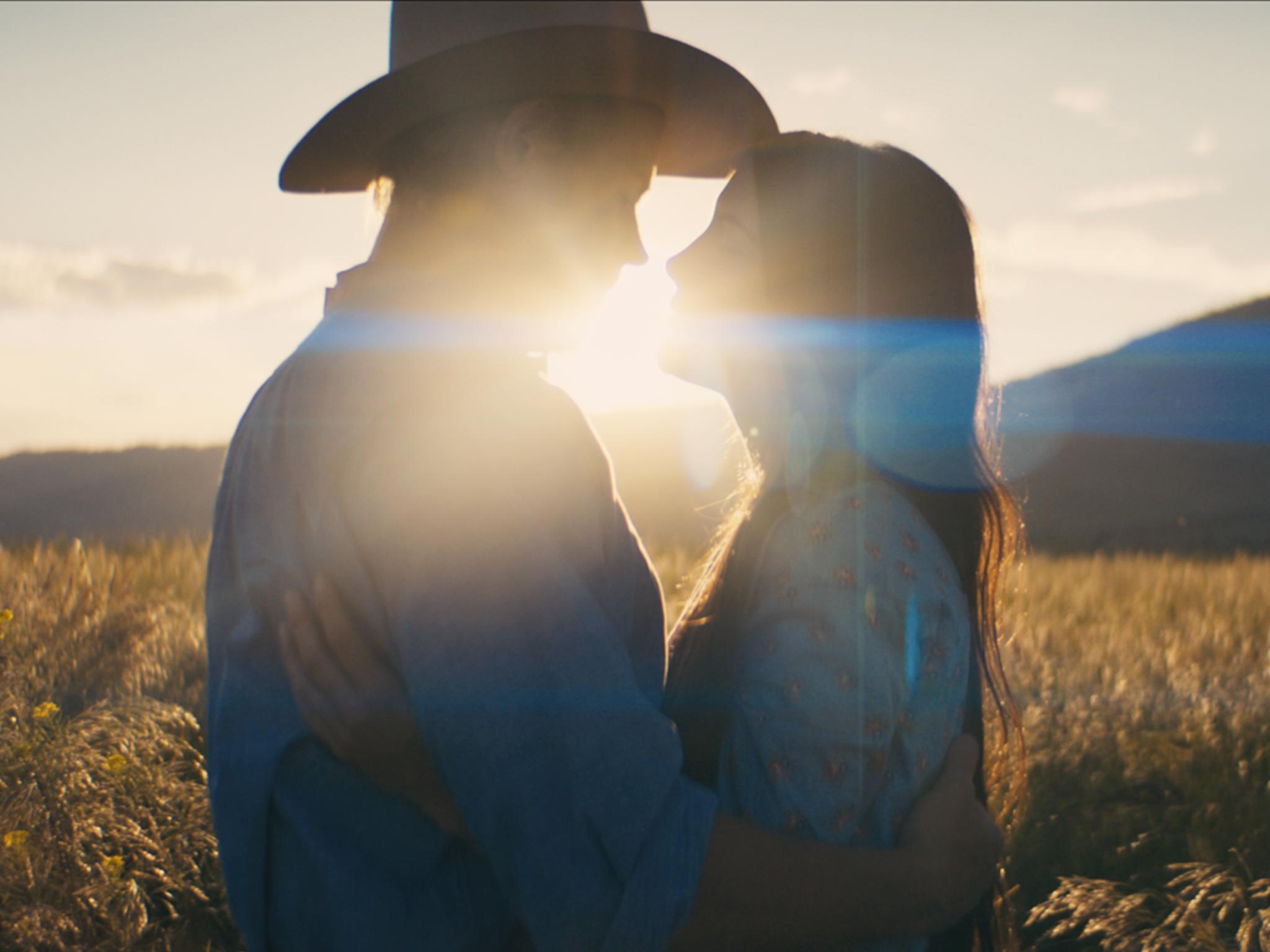

Hitting theaters is “Where the Wind Blows,” the John Schimke-directed film starring Trevor Donovan and Ashley Elaine. It promises fans of classic cinema a story with all the essential elements of old-fashioned romance: a tormented protagonist, a woman in distress, and a love that blossoms when it seems most improbable.
Based on the novel by Caroline Fyffe, the film embraces a story that, while told a thousand times before, continues to serve as an inspiration and foundation for romantic cinema.
This time, the film takes us back to the roots of American cinema and its most iconic genre: the western. It’s a story that stands out for its sweetness and a protagonist designed to make you swoon, played by Trevor Donovan, who perfectly fits the role of the handsome hero tormented by a past that—you guessed it—always returns.
Mais artigos


The Literary Heart of a Western
“Where the Wind Blows” is an adaptation of the novel of the same name by Caroline Fyffe, a USA Today bestselling author and a success in the western romance genre. The novel is praised for its “tender,” “charming,” and “moving” tone, centered on a love story that flourishes under unexpected circumstances.
The book’s plot follows Chase Logan, a wandering and lonely cowboy, marked by a past of “pain and guilt” that has led him to a nomadic life, unable to put down roots. His life is turned upside down when the death of a friend saddles him with the responsibility of informing the man’s widow, Jessie Strong. Upon arriving, he finds a woman who, in order to finalize the adoption of two orphaned children, makes him a desperate proposal: to pose as her husband. This pact gives rise to a “marriage of convenience” dynamic that evolves into a “found family,” a central theme of the work. The core themes Fyffe explores are redemption, the healing power of love and family to overcome trauma, and the resilience of the pioneer spirit on the harsh American frontier.
A crucial factor that suggests a faithful adaptation is the direct involvement of the author. Caroline Fyffe is credited as a co-writer of the film, alongside Mike Maden and the director, John Schimke. The original creator’s involvement in the script is a strong signal that the film will seek to preserve the emotional core and character development that made the novel a success.
Furthermore, by focusing on the vulnerability of its male protagonist and his healing through fatherhood and love, the story aligns with a contemporary trend in the western genre. Far from glorifying the hypermasculine and impenetrable cowboy archetype, it explores his need for connection and his capacity for care. In this way, “Where the Wind Blows” not only adapts a romance novel but also participates in the modern conversation about the deconstruction and redefinition of masculinity in the most iconic genre of American cinema.
Director John Schimke and the Landscape as a Character
At the helm of this project is John Schimke, a director whose previous filmography includes the black comedy Don’t Tell Larry. “Where the Wind Blows” is a world away from that film, as the director leans into a more emotional and classic style to craft a traditional romance. Far from seeking to reinvent cinema or love stories, it rests on the most classic parameters of the genre.
The production structure reinforces this sense of authenticity. The film is produced by Nova Vento Entertainment, described as “Montana’s leading production company,” and distributed by Level 33 Entertainment, a company with a history in independent film. And beyond the human protagonists, the film has a great ally: the stunning natural landscapes of Montana. The film doesn’t hesitate to showcase the wonders of its scenery in a classic production that favors psychological drama and atmosphere over large-scale shootouts, finding its strength in intimate human stories.
The Cast: Cowboys of Yesterday and Today on a New Horizon
The success of a character-driven drama largely depends on its cast, and “Where the Wind Blows” has assembled a team that bridges the genre’s present with its cinematic legacy.
In the lead role of Chase, we find Trevor Donovan, an actor whose “rugged cowboy” image perfectly matches the character’s description. The female lead is Ashley Elaine, an actress who skillfully embodies a role that is both fragile and strong—a classic portrayal of a woman surviving in a man’s world (with the help of a friend, no less). The actress handles the role well, offering an efficient performance and shaping a character that, though classic, is full of nuance.
However, it’s in the supporting cast that the film reveals a brilliant casting strategy. The inclusion of veterans like C. Thomas Howell and Lochlyn Munro is no coincidence. Howell is an icon of a generation, immortalized by his roles in ’80s classics like The Outsiders and Red Dawn. His presence evokes nostalgia for a golden era of cinema and brings the weight of having played young, complex, and often tormented characters—a perfect echo for Chase’s journey. For his part, Lochlyn Munro has direct credibility in the genre thanks to his role in Clint Eastwood’s masterpiece, Unforgiven, in addition to being a familiar face to audiences from his roles in cult comedies.
This casting functions as a kind of cinematic archaeology. It’s not just about hiring actors, but about invoking their on-screen history. Howell and Munro act as cultural signifiers, creating an intergenerational bridge between the audience that grew up with their films and Donovan’s younger followers. Their participation elevates the project, giving it a seal of quality and a historical resonance that distinguishes it from other independent productions. Alongside other solid actors like Michelle Hurd, this cast promises to provide the necessary depth to a story that depends entirely on the strength of its performances.
Our Take
“Where the Wind Blows” is a film that will delight those looking for a classic romance, those who want a western without the violence, and viewers who prefer a classic love story over a tale of violence and revenge. It is a film about characters, about male vulnerability, and about family. It won’t appeal to everyone—it wasn’t created or designed for that purpose—but if you’re looking for a classic romance, it will certainly be to your liking.
“Where the Wind Blows” doesn’t seem to aspire to reinvent the western, but to rediscover its heart. It seeks to demonstrate that the universal themes of love, family, and the search for a place in the world are as powerful today as ever, and that the genre still has the strength to tell new and moving stories.
The film knows its audience and delivers what it promises: a well-shot western love story with those “timeless” characters who will undoubtedly capture the hearts of the most romantic viewers.
Enjoy the movie.