

Robert Redford, the American screen icon who parlayed matinee-idol charisma into a six-decade career as a filmmaker, activist, and patron of independent cinema, died on Tuesday, September 16, 2025. He was 89. His publicist confirmed he died at his home in Sundance, Utah, surrounded by loved ones. No cause was disclosed.
Redford rose from Broadway to Hollywood stardom in the late 1960s and 1970s, defining an era with a run of culturally formative hits: Butch Cassidy and the Sundance Kid (1969), The Sting (1973), The Way We Were (1973), and All the President’s Men (1976). The performances, often pairing easy charm with flinty resolve, made him an international marquee name while helping shape the modern political thriller and romantic drama. Equally at home in westerns, capers, and issue-driven stories, he became a touchstone for a generation of moviegoers and a durable reference for filmmakers who followed.
Turning to directing, Redford won the Academy Award for Best Director for Ordinary People (1980), the painstaking family drama that also took Best Picture. He later earned another directing nomination for Quiz Show (1994). Throughout the 1990s and 2000s he alternated between acting and directing, adding producing credits and mentoring roles as he went. Late-career turns such as the nearly wordless survival saga All Is Lost (2013) showcased his physical command and restraint, while The Old Man & the Gun (2018) served as a reflective coda to his leading-man era.
Mais artigos
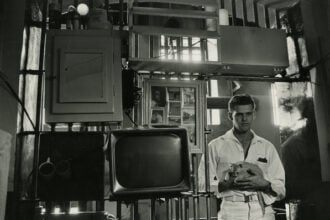


Beyond his filmography, Redford’s most consequential institutional legacy is the Sundance Institute, founded in 1981, and the Sundance Film Festival, which evolved into the premier showcase for American independent film. Sundance became a pipeline for discovery, connecting emerging storytellers with audiences, distributors, and the broader industry. Its influence reshaped how smaller films are financed, marketed, and released, and helped launch or accelerate the careers of writers and directors who now define contemporary cinema.
A lifelong environmentalist and advocate for artists, Redford accrued honors that reflected both artistic achievement and civic engagement, including the Presidential Medal of Freedom in 2016. He was an early and persistent voice on conservation, public lands, and climate issues, using his platform to amplify science, policy, and grassroots campaigns. Even as he reduced his on-screen appearances, he remained a visible champion for free expression and an independent creative sector.
Born Charles Robert Redford Jr. in Santa Monica on August 18, 1936, he studied art before acting drew him to New York stages and then to television and film. The “Sundance” moniker that became synonymous with his independent-film mission began as a character name opposite Paul Newman in Butch Cassidy and the Sundance Kid, then became a place—his Utah home and artistic hub—and ultimately a global brand for discovery.
Tributes from across the film community and beyond on Tuesday underscored a breadth of influence that spanned studio classics and micro-budget breakthroughs. Colleagues and protégés credited Redford with creating space for uncompromising work and with modeling a version of celebrity that fused craft, stewardship, and public purpose. Details on memorial plans were not immediately available. Redford is survived by his wife, Sibylle Szaggars, and his children and grandchildren.