

The Unmistakable Presence
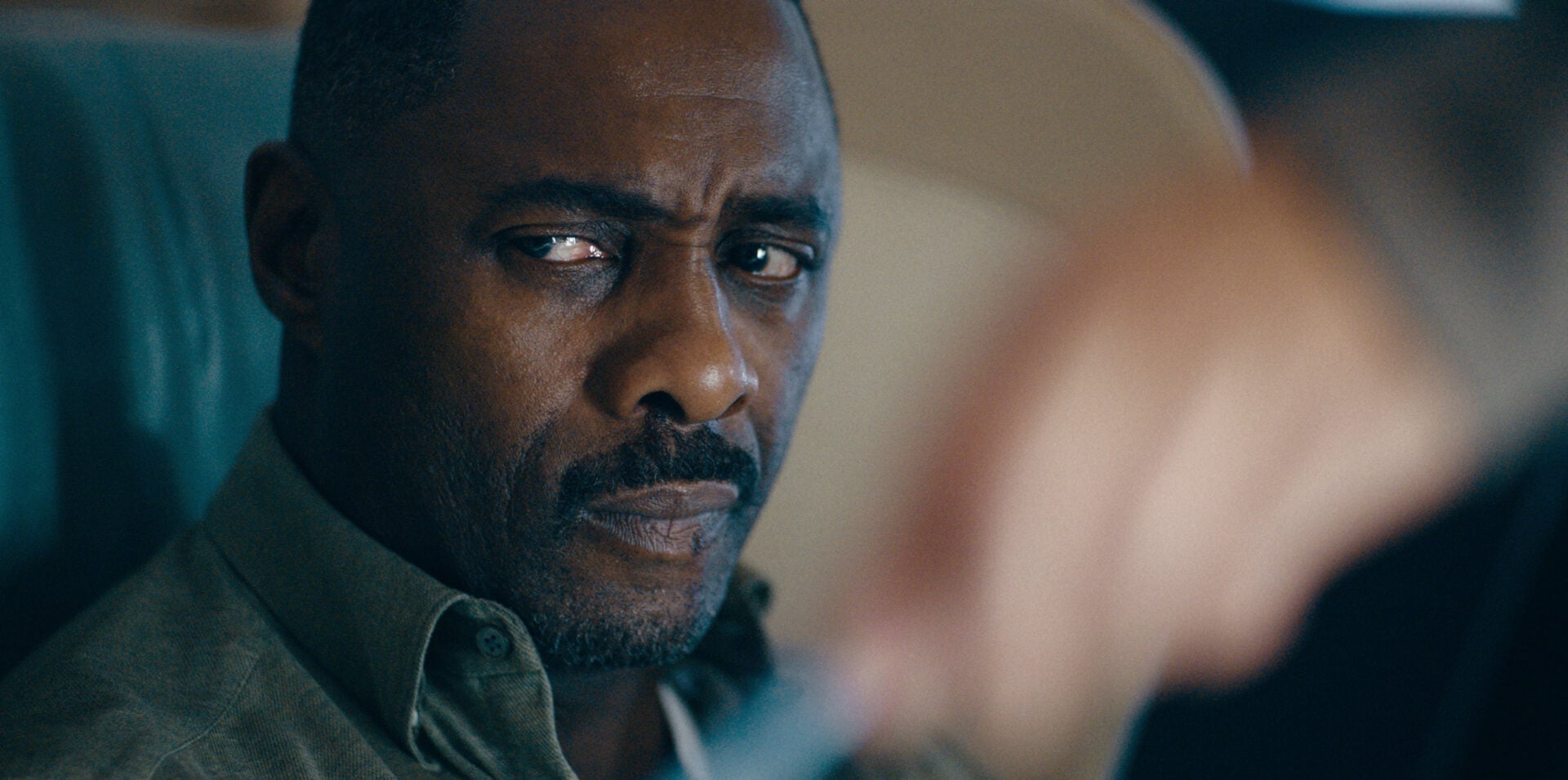
The image is now indelible: a man on a hijacked plane, calm amidst chaos, his mind racing faster than the aircraft itself. As Sam Nelson in the Apple TV+ thriller Hijack, Idris Elba delivered a performance that was less about action-hero theatrics and more about palpable, high-stakes intelligence. The series became a global streaming success, earning critical acclaim and an Emmy nomination for its star, with a highly anticipated second season already in the works. The role is a perfect distillation of the Elba phenomenon: a commanding presence that grounds extraordinary circumstances in a compelling, relatable humanity. It frames him not as a legacy actor coasting on past glories, but as a vital, contemporary force in global entertainment.
To define Idris Elba is to embrace a multitude of identities. He is an actor of formidable range, a Golden Globe and Screen Actors Guild Award winner who moves seamlessly between prestige drama and blockbuster spectacle. He is also DJ Big Driis, a musician who has commanded the decks at Coachella and the royal wedding of Prince Harry and Meghan Markle. He is a producer and director, shaping stories through his own production company. He is a rapper, a fashion icon, an entrepreneur, and a dedicated humanitarian, addressing world leaders as a UN Goodwill Ambassador. His career is a masterclass in the rejection of categorization. Where the entertainment industry often demands artists choose a single lane, Elba’s trajectory has been a powerful exercise in the principle of “and” over “or.” He is a British icon and an American star, a blockbuster king and an indie darling, a global celebrity and a grassroots advocate. This refusal to be confined to a single box is the defining characteristic of his ascendancy. The central question of his remarkable journey is how the only child of West African immigrants, raised on the tough streets of East London, managed to navigate these disparate worlds, not just to survive, but to master them all.
Forging an Artist: From Hackney to the National Youth Theatre
Idrissa Akuna Elba was born on September 6, 1972, in Hackney, a vibrant and diverse borough of London. He was the only child of Winston, a factory worker from Sierra Leone, and Eve, a clerical worker from Ghana. His parents, who had married in Sierra Leone before moving to London, instilled in him a deep connection to a West African heritage that would become a foundational element of his adult identity and philanthropic work.



His early life was a study in contrasts. He spent his first years in the multicultural melting pot of Hackney before his family moved to Canning Town, a predominantly white, working-class area in the East End. The transition was a culture shock. At his new all-boys school, Trinity Boys, he faced overt racism and bullying, an experience that forged a profound resilience. It was here that he shortened his first name to Idris, partly in response to teasing. This constant navigation of different, often conflicting, social environments became a crucible for the adaptability that would later define his acting. He learned to code-switch, to observe, and to hold his own ground—essential skills for a future performer.
During these formative years, his two great passions emerged in parallel. An encouraging drama teacher spotted his potential, helping him secure a pivotal £1,500 grant from the Prince’s Trust. This funding was his ticket into the prestigious National Youth Music Theatre in 1990, a formal training ground where he honed his craft. Simultaneously, he was immersing himself in the raw, improvisational world of London’s burgeoning music scene. He helped his uncle, a wedding DJ, and soon started his own DJ company with friends, spinning records in nightclubs under the moniker DJ Big Driis. The structured discipline of the theatre and the intuitive, crowd-reading energy of the DJ booth were not opposing forces but complementary parts of his artistic education. To support these ambitions, he worked a series of odd jobs, including tire-fitting and taking night shifts at the Ford Dagenham car plant, the same factory that employed his father. This period of hustle, balancing blue-collar work with artistic dreams, cemented a formidable work ethic that would fuel his rise.
The Stringer Bell Effect: An American Breakthrough
After cutting his teeth in the British television industry with a string of minor roles in the 1990s—appearing in everything from murder reconstructions on Crimewatch to episodes of Absolutely Fabulous, The Bill, and the soap opera Family Affairs—Elba grew frustrated. He felt that the lead roles for Black actors were scarce in the United Kingdom and made the career-defining decision to move to New York City in search of greater opportunities. The gamble was immense, and the early years were a struggle. He settled in Brooklyn and later Jersey City, supporting himself by DJing in small clubs and working as a doorman at the comedy club Carolines, all while auditioning for roles.
His perseverance paid off when he landed the part that would change his life and alter the landscape of television: Russell “Stringer” Bell in HBO’s The Wire. Running from 2002 to 2004, the show was a gritty, novelistic exploration of the drug trade in Baltimore. Elba’s portrayal of Bell was a revelation. Stringer was no ordinary gangster; he was a cerebral, Machiavellian strategist, the second-in-command of the Barksdale drug empire who attended community college and applied macroeconomic theories to his criminal enterprise. The character was a complex tapestry of ambition, intellect, and ruthless pragmatism, a portrayal that defied stereotypes and became one of the most iconic and analyzed figures in television history. Elba’s performance was so immersive, his American accent so flawless, that the show’s creators were initially unaware he was British.
The critical acclaim for The Wire was monumental, with many critics and viewers hailing it as one of the greatest television series ever made. Elba’s performance was universally praised, launching him into a new stratosphere of recognition and establishing his international career. Yet, the role left a mark so profound that, over two decades later, Elba has never watched the series. His reasoning offers a rare window into his artistic process. He has explained that the experience of making the show was so intense and real that he cannot separate himself from it to become a viewer. He felt he was living the character, not just playing him, stating that when Stringer Bell died, “a part of me died with that character”. This refusal to revisit his most iconic role is not born of critique but of a deep, almost sacred, connection to the work. It suggests an acting process that is profoundly immersive, where the boundary between self and character becomes porous, revealing the personal cost of creating a performance that would change his life forever.
The Detective and the Warlord: A Decade of Defining Roles
After the global recognition that came with The Wire, Elba entered a decade of work that would cement his reputation as one of the most compelling dramatic actors of his generation. He returned to British television in 2010 for a triumphant turn in the BBC psychological crime thriller Luther. As Detective Chief Inspector John Luther, Elba was a force of nature—a brilliant, obsessive detective whose genius for solving crimes was matched only by the ferocity of his personal demons. The character was a perfect vehicle for Elba’s signature gravitas, a man operating in a constant moral grey area, haunted by the darkness he confronts daily. The role showcased his commanding physical presence and his capacity for profound emotional vulnerability, earning him a Golden Globe Award, a Screen Actors Guild Award, and four Primetime Emmy Award nominations. The series was a critical and popular smash, running for five seasons and culminating in the 2023 feature film, Luther: The Fallen Sun.
In 2013, Elba took on the monumental task of portraying a global icon in Mandela: Long Walk to Freedom. The film itself received mixed reviews for attempting to condense such an epic life into a single narrative, but Elba’s performance was universally lauded as its towering strength. He captured the evolution of Nelson Mandela from a young revolutionary to a political prisoner and finally to a revered statesman, earning a Golden Globe nomination for his powerful and dignified portrayal. The Los Angeles Times called the film “astonishing,” while Time magazine proclaimed that Elba was “magnificent”.
Two years later, he delivered what many consider to be one of his finest and most harrowing performances in Cary Joji Fukunaga’s Beasts of No Nation (2015). As the Commandant, a charismatic and monstrous warlord leading an army of child soldiers in a fictional West African country, Elba was both magnetic and terrifying. He imbued the character with a complex, abusive paternalism that made his evil all the more chilling. The Guardian praised his “outstanding performance,” calling him “charismatic and sinister”. The role was a tour de force of nuance and menace, earning him a Screen Actors Guild Award for Best Supporting Actor and nominations for a BAFTA and a Golden Globe. These three roles—the detective, the statesman, and the warlord—form a thematic trifecta in his career. Though vastly different, John Luther, Nelson Mandela, and the Commandant are all figures of immense authority defined by the psychological weight of their power. This decade of work revealed Elba’s unique artistic signature: a profound exploration of burdened leadership, morality, and the human cost of unwavering conviction.
Building Universes: The Blockbuster King
While establishing himself as a dramatic heavyweight, Elba simultaneously became a ubiquitous and highly sought-after presence in the world of blockbuster filmmaking. His entry into the modern franchise era came in 2011 with Marvel Studios’ Thor, where he was cast as Heimdall, the stoic, all-seeing guardian of Asgard’s Bifrost Bridge. Though a supporting character, Elba brought a regal dignity and gravitas that made Heimdall a fan favorite. He would reprise the role across the Marvel Cinematic Universe in Thor: The Dark World, Avengers: Age of Ultron, Thor: Ragnarok, Avengers: Infinity War, and a final cameo in Thor: Love and Thunder.
His commanding screen presence made him a natural fit for large-scale genre films. He played the resolute Captain Janek in Ridley Scott’s sci-fi epic Prometheus (2012) and delivered one of cinema’s most memorable speeches as Marshal Stacker Pentecost, who was “canceling the apocalypse” in Guillermo del Toro’s Pacific Rim (2013). He further expanded his franchise footprint by playing the formidable villain Krall in Star Trek Beyond (2016) and the cybernetically enhanced antagonist Brixton Lore in the Fast & Furious spin-off Hobbs & Shaw (2019).
In 2021, he crossed over to the DC universe, leading the ensemble as the world-weary mercenary Bloodsport in James Gunn’s The Suicide Squad. He then brought his distinctive voice to the role of the powerful echidna Knuckles in Sonic the Hedgehog 2 (2022), a role he reprised for a popular spin-off miniseries on Paramount+ in 2024. In these varied roles, a clear pattern emerges. Elba often plays a crucial supporting character rather than the central protagonist, yet his performances consistently elevate the material. He brings a unique “center of gravity” to any ensemble, grounding fantastical worlds with an inherent authority and charisma that makes every project he joins feel more significant. This “Elba Effect” has made him one of the most valuable assets in franchise filmmaking—a guarantor of quality and presence who can anchor a universe, regardless of his screen time.
Behind the Decks and in the Director’s Chair: The Multifaceted Creator
Running parallel to his meteoric acting career has been a lifelong, deeply authentic passion for music. Long before he was a household name, he was DJ Big Driis (or Big Driis the Londoner), a fixture in London’s pirate radio and club scene in the early 1990s. When he moved to the United States, DJing was not a hobby but a means of survival, paying the bills while he chased acting roles. His musical style is an eclectic and personal fusion of his influences: a blend of house, hip-hop, soul, reggae, and the Afrobeats of his West African heritage.
His music career is no vanity project. He has released several EPs, including 2006’s Big Man, and produced the 2014 album Idris Elba Presents Mi Mandela, a collection of South African-inspired music created after his experience playing the iconic leader. He has collaborated with artists as diverse as Jay-Z, Macklemore & Ryan Lewis, and Wiley, and has performed at some of the world’s most prestigious venues, from Glastonbury to a residency in Ibiza. In 2019, he launched his own record label, 7Wallace Music, to promote fresh talent.
This creative impulse extends to production and direction. In 2013, he founded Green Door Pictures, a production company with a clear mission: to champion diversity, inclusion, and emerging talent, creating opportunities for voices often overlooked by the mainstream industry. This endeavor is not just a business venture but the institutionalized solution to the very problem that propelled him to leave the UK years earlier. Having experienced the lack of substantive roles for diverse actors, he is now using his platform to build the infrastructure he was denied. Green Door has produced the semi-autobiographical Sky comedy In the Long Run, the Netflix series Turn Up Charlie, and the feature film Concrete Cowboy. He made his feature directorial debut in 2018 with the Jamaican-British crime drama Yardie and is set to direct the upcoming psychological thriller This is How it Goes. Through strategic partnerships, such as a joint venture with Kris Thykier’s Archery Pictures and a collaboration with Mo Abudu’s EbonyLife Media to develop Afro-centric stories, Elba is actively creating a pipeline for the next generation of diverse storytellers, turning his own success into a vehicle for systemic industry change.
The Next Chapter: Power Player and Global Advocate
Far from slowing down, Idris Elba’s career is entering its most dynamic phase, marked by a slate of high-profile projects and a deepening commitment to global advocacy. The action-thriller series Hijack is set to return for a second season, moving the high-stakes tension from a plane to a hijacked underground train in Berlin. On the big screen, he recently starred opposite John Cena in the Prime Video action-comedy Heads of State, playing a British Prime Minister forced to go on the run with his American counterpart. Looking ahead, he is slated to join another major franchise, taking on the role of Duncan, also known as Man-At-Arms, in the highly anticipated live-action Masters of the Universe film, set for a 2026 release. He is also stepping back behind the camera to direct and star in the psychological drama This is How it Goes for Apple TV+.
Alongside this packed professional schedule, Elba has embraced a significant role on the world stage. In April 2020, he and his wife, Sabrina Dhowre Elba, were appointed UN Goodwill Ambassadors for the International Fund for Agricultural Development (IFAD). Their work is not generic celebrity charity; it is highly specific, deeply researched, and directly connected to their heritage. They focus on critical issues of food security, climate change, and environmental conservation, with a particular emphasis on empowering the small-scale farmers who produce a significant portion of the world’s food but often face extreme poverty.
Their advocacy is hands-on. They have visited IFAD-supported projects in Sierra Leone, meeting with farmers and witnessing the impact of rural finance and production support programs. They have used their platform at major global forums, including the COP26 climate summit and the World Economic Forum in Davos, to lobby world leaders. At Davos, Elba powerfully articulated their mission, stating that the world’s poor are not looking for “aid and handouts, they’re looking for investment”. This sophisticated, business-minded approach to philanthropy reflects a convergence of all facets of his life: his global platform, his entrepreneurial spirit, and his profound connection to Africa. The boy who once felt a “deep shame” for not having visited his parents’ homelands has become a man who leverages his international influence to champion their continent’s future.
The Man Behind the Icon
Away from the cameras and the global stage, Elba is a devoted family man. He is married to model and fellow humanitarian Sabrina Dhowre Elba, his partner in both life and advocacy. He is a father to two children: a daughter, Isan, from his first marriage to Hanne “Kim” Nørgaard, and a son, Winston, from a previous relationship with Naiyana Garth. He has spoken openly about how fatherhood provides him with a deep sense of purpose, motivating him through difficult times and helping him to “love myself a bit more”. In a poignant tribute, he named his son after his own father, Winston, who passed away from lung cancer in 2013. He navigates the complexities of parenting in the public eye with grace, supporting his daughter’s ambitions in the film industry while sharing the relatable challenge of when she auditioned for, but did not get, a role opposite him in the film Beast.
No discussion of Idris Elba’s career would be complete without acknowledging the ghost of 007. For over a decade, his name has been at the forefront of speculation about who would next play James Bond. The persistent rumors became a global cultural phenomenon, sparking a widespread conversation about race, identity, and the modernization of an iconic character. While Elba has consistently and gracefully debunked the rumors, often with a playful nod to the speculation, he has also been clear about his perspective. “We were all kind of laughing about the rumors because they are just that,” he stated, confirming that while he is close with the producers, there has “never been any sort of truth to any of it”.
Ultimately, Elba’s legacy will not be defined by a single role—not by the cerebral gangster Stringer Bell, the tormented detective John Luther, or even the James Bond that never was. His legacy is one of relentless versatility and a refusal to be contained. He has transcended the traditional career path of an actor to become a true cultural architect. He has built an artistic empire on his own terms, using his success to create opportunities for others and leveraging his global platform to advocate for a more equitable world. From DJ Big Driis spinning records in the clubs of East London to a global icon shaping conversations in Hollywood and at the United Nations, Idris Elba has proven to be the master of his own ever-expanding universe.