

The Reign of the Penguin
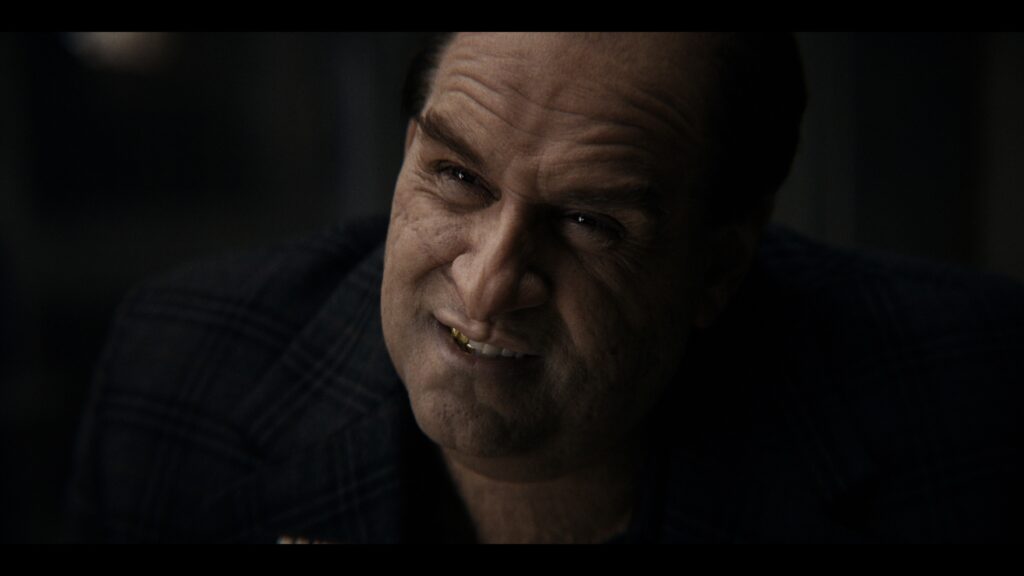
In the pantheon of cinematic transformations, few have been as complete, as startling, and as critically lauded as Colin Farrell’s disappearance into Oswald “Oz” Cobb. First introduced as a snarling, scarred mid-level gangster in Matt Reeves’s The Batman (2022), Farrell’s Penguin was a masterclass in character creation, buried under layers of prosthetics yet radiating a palpable menace and a wounded ambition. But it was in the 2024 HBO miniseries, The Penguin, that the performance ascended from a brilliant supporting turn to a career-defining triumph. The series, a sprawling eight-hour crime saga charting Oz’s bloody rise in the power vacuum of a post-Falcone Gotham, became a cultural event, earning comparisons to HBO’s own legendary dramas like The Sopranos.
Farrell’s work was the gravitational center of this world. It was a gonzo, go-for-broke performance, his wildest transformation yet. With a voice like gargled glass, a waddling gait, and a face so convincingly altered that the actor beneath was unrecognizable, he crafted a portrait of a man both pathetic and terrifying. Critics noted he looked and sounded like “James Gandolfini ate James Cagney and then spent his recovery in the hospital watching the complete works of Robert De Niro”. The performance was not merely an impersonation; it was an inhabitation. Despite being deprived of the use of his famously expressive eyebrows, he used his whole head, body, and voice to sell the character, creating a truly transformative performance. Critics and audiences were unanimous in their praise, recognizing the profound artistry required to convey such a rich inner life through a mask of silicone and makeup. The industry agreed, bestowing upon him a Golden Globe and a Screen Actors Guild Award for his portrayal, cementing the role as a monumental achievement in a career full of surprising turns.
This success, however, is more than just another accolade for a talented actor. It represents the perfect synthesis of the two distinct phases of his career. The role is situated within a massive, commercially potent blockbuster franchise, echoing the Hollywood machine that first made him a star. Yet, the performance itself is a deep, nuanced, and transformative piece of character work, the kind he honed during a decade in the wilderness of independent cinema. The Penguin is not a comeback; it is a culmination. It is the arrival point of a long, often treacherous journey that took a brash young man from Dublin, catapulted him into the dizzying heights of global fame, watched him nearly burn out, and then witnessed his painstaking reconstruction, piece by piece, into one of the most respected actors of his generation. To understand the virtuoso of Gotham, one must first understand the lad from Castleknock.



The Lad from Castleknock
Colin James Farrell was born on May 31, 1976, in Castleknock, a suburb of Dublin, Ireland. His early life was steeped in a different kind of performance: football. His father, Eamon, and his uncle, Tommy Farrell, were both celebrated players for Shamrock Rovers FC, one of Ireland’s most storied clubs. For a time, it seemed Colin was destined to follow that legacy, playing for a local team managed by his father. But a different path began to call to him, one that revealed an early pattern of rejecting established expectations in favor of a more instinctive, personal pursuit.
His formal education at St. Brigid’s National School and the exclusive Castleknock College was marked by a rebellious streak. He was a restless spirit, more interested in testing boundaries than in academic conformity, a trait that culminated in his expulsion at age 17 for punching a supervisor. Around this time, he unsuccessfully auditioned for the Irish boy band Boyzone, another conventional path to fame that proved not to be his. The true spark was ignited not on a pitch or a stage, but in a darkened cinema. The performance of Henry Thomas in Steven Spielberg’s E.T. the Extra-Terrestrial moved him to tears and planted a seed: acting was where his future lay.
With his brother’s encouragement, he enrolled in the prestigious Gaiety School of Acting, The National Theatre School of Ireland, whose alumni include a host of Irish talent like Aidan Turner and Olivia Wilde. Yet again, however, the formal, prescribed path was one he would ultimately abandon. Before completing his studies, he was cast as the charming troublemaker Danny Byrne in the popular BBC drama Ballykissangel. For two seasons, from 1998 to 1999, he played the “Dublin bad boy,” a role that gave him his first real taste of public recognition and served as a crucial launchpad. The decision to drop out of a renowned institution for a hands-on opportunity was not just a lucky break; it was the first major demonstration of a career-long tendency to trust his gut over a formula, to learn by doing rather than by studying. This instinct, for better and for worse, would soon carry him across the Atlantic and into the heart of Hollywood.
Hollywood’s New Prince: The Tigerland Anomaly
Farrell’s entry into Hollywood was as unconventional as it was explosive. After a feature film debut in Tim Roth’s harrowing directorial effort The War Zone (1999) and a role opposite Kevin Spacey in Ordinary Decent Criminal (2000), he landed an audition that would change his life. Director Joel Schumacher was casting for Tigerland, a gritty, low-budget drama about American soldiers training for Vietnam in 1971. Farrell, a completely unknown Irish actor, walked into the London audition and, on the basis of his “irreverent charm” alone, was asked to come back. He taped himself performing a Texas drawl after a few pints and sent it to Schumacher, who promptly cast him in the lead role of the rebellious Private Roland Bozz.
The film, released in 2000, was a commercial catastrophe, earning a paltry $140,000 against its $10 million budget. By any conventional metric, it was a failure. But in Hollywood, buzz can be a more valuable currency than box office receipts. Critically, Tigerland was a sensation, and the praise was almost entirely focused on its magnetic lead. Reviewers were captivated by Farrell’s performance, calling him “fascinating,” “charismatic,” and intense; he was immediately branded the “One to Watch,” the “Next Big Thing”. As the iconoclastic Bozz, Farrell was a “marvel to watch,” displaying an insouciant swagger and a performance of broad emotional range that burned him into the consciousness of critics.
This critical adoration created a frenzy within the industry. Hollywood operates on a deep-seated fear of missing out, and no studio wanted to be the one that passed on the next great star. As Farrell himself later acknowledged, he benefited from a system where executives, hearing something was hot, would rush to get involved. This industry hype created a self-fulfilling prophecy. Before he had a single hit to his name, he was being offered major roles. Though his next two films, the western American Outlaws (2001) and the war drama Hart’s War (2002), were also commercial disappointments, the momentum was unstoppable.
The true breakthrough came in 2002 when he was cast opposite the world’s biggest movie star, Tom Cruise, in Steven Spielberg’s sci-fi blockbuster Minority Report. The role of the ambitious and antagonistic Department of Justice agent Danny Witwer had been turned down by Matt Damon, but Farrell seized the opportunity and held his own against Cruise, proving he had the screen presence to command a global stage. Playing the cocky and smug Witwer, Farrell set himself up as the film’s perfect antagonist, a hotshot bureaucrat looking to step on anyone to get to the next rung of the ladder. The film was a massive critical and commercial success, grossing over $358 million worldwide and cementing Farrell’s status as a bona fide leading man.
The floodgates opened. In a whirlwind period between 2002 and 2003, he starred in a string of hits that solidified his box office appeal: Schumacher’s claustrophobic thriller Phone Booth, the CIA drama The Recruit opposite Al Pacino, and the action-packed S.W.A.T. alongside Samuel L. Jackson. He also memorably played the villain Bullseye in Daredevil (2003). In less than three years, an unknown actor who had led a box office bomb was one of the most in-demand stars in the world. His fame had been manufactured by industry buzz before it was proven at the box office, a classic Hollywood trajectory that placed an almost unbearable amount of pressure on his young shoulders.
The High Cost of a Spinning World
The meteoric rise to fame came at a steep personal price. As his professional life exploded, his private life spiraled into a chaotic whirlwind that became fodder for the world’s tabloids. Farrell fully embraced the “bad boy” archetype that the media had crafted for him. With his leather jackets, ever-present cigarette, and roguish charm, he became a fixture of the party scene, known for his wild antics and a string of high-profile relationships and flings with stars like Britney Spears, Lindsay Lohan, and Demi Moore.
This persona was a double-edged sword. On one hand, it was a marketable brand that fueled his celebrity, making him a household name beyond his film roles. On the other, it was a genuine reflection of a man losing his grip. Farrell later described the period as “insane,” admitting his “head was spinning” and that he had “no idea what was going on”. The pressure was immense, and he coped through excess. He has since confessed to being so deep in a haze of addiction that he has no memory of filming entire movies, including American Outlaws.
His substance abuse was staggering. In a candid interview, he recounted a weekly intake that included 20 ecstasy tablets, four grams of cocaine, six of speed, half an ounce of hash, multiple bottles of whiskey and wine, and 60 pints of beer. He was, by his own account, “very drunk or high for about 16 years,” a habit that began when he was just 14. This self-destructive behavior coincided with some of his biggest and most demanding roles, including Oliver Stone’s epic Alexander (2004). The film, a massive undertaking in which he starred as the titular conqueror, was a critical and commercial disaster in the United States, a high-profile failure that only intensified the scrutiny on him. By 2004, he was becoming “something of a laughingstock”.
The “bad boy” brand that had helped make him famous was becoming toxic. His off-screen antics were beginning to overshadow his work, and with a few major flops on his record, Hollywood began to write him off. The character he had created, he later reflected, had benefited him for a time, but eventually “it all began to crumble around me”. The very persona that had defined his rise was now threatening to cause his fall. A change was not just necessary; it was a matter of survival, both personally and professionally.
An Altered State: Sobriety, Fatherhood, and the Road to Bruges
The turning point arrived in 2005. After wrapping production on Michael Mann’s stylish crime drama Miami Vice, a notoriously difficult shoot, Farrell checked himself into rehab. He emerged in 2006, sober for the first time in his adult life, a state he has maintained ever since. But his decision was fueled by more than just professional necessity. It was driven by a new, profound purpose in his life: fatherhood.
In 2003, Farrell and his then-girlfriend, model Kim Bordenave, welcomed their first child, a son named James Padraig Farrell. James was later diagnosed with Angelman Syndrome, a rare neuro-genetic disorder that affects development and requires lifelong care. The responsibility of being a father to a child with special needs was a seismic shift. Farrell has been unequivocal about the impact James had on him, stating plainly, “James saved my life”. He knew he was in no condition to be the father his son deserved. “He was a big part of me putting the bottle down,” Farrell explained, recognizing that his self-destructive lifestyle was incompatible with the demands of parenthood. “What my first son James did was allow me to care for something in this world when I couldn’t care for myself”.
This personal transformation coincided with a dramatic professional shift. The offers for big-budget blockbusters, which had already been dwindling after a series of underperforming films, effectively dried up. This career “demotion,” however, turned out to be the most liberating event of his acting life. Stripped of the pressure to carry $100 million movies and live up to a manufactured star persona, he was forced to reconnect with the craft of acting on its most fundamental level. He turned to the world of independent film, a move that would not only save his career but redefine it.
The first fruit of this new chapter was Martin McDonagh’s 2008 directorial debut, In Bruges. Farrell was cast as Ray, a novice hitman tormented by guilt after a job goes horribly wrong, who is sent to hide out in the picturesque Belgian city. The role of a man grappling with a terrible mistake, seeking redemption while steeped in dark, profane humor, resonated deeply. It allowed him to shed the skin of the Hollywood action hero and showcase a vulnerability and comedic timing that had been largely untapped. The film was a critical masterpiece, and Farrell’s performance was hailed as a revelation, flawlessly moving from wise-cracking hedonism to shell-shocked despair. It earned him his first Golden Globe Award for Best Actor, a powerful validation that his new path was the right one. The perceived failure of losing his blockbuster status had, paradoxically, led directly to his greatest artistic success. Colin Farrell, the movie star, was gone. In his place, Colin Farrell, the actor, had arrived.
The Character Actor’s Canvas
The decade that followed In Bruges saw Farrell meticulously rebuild his career, not by chasing fame, but by chasing challenging roles and visionary directors. He became a sought-after collaborator for some of the most distinctive voices in independent cinema, consistently choosing parts that deconstructed his own star persona and pushed him into uncomfortable, transformative territory. A key hallmark of his evolving style was his intelligence and subtlety, particularly his mastery of what acting teachers call “playing against”—portraying a character trying not to express an emotion, thereby creating a powerful and authentic internal tension.
His partnership with Martin McDonagh became one of the most fruitful of his career. They reunited for the meta-crime comedy Seven Psychopaths (2012), where Farrell played the bewildered straight man, Marty, amidst a cast of lunatics, demonstrating his deft comedic instincts. As the hard-drinking screenwriter swept up in his friend’s criminal shenanigans, Farrell served as a hilarious, high-strung voice of reason, proving just as adept at playing the everyman as he was at delivering McDonagh’s signature one-liners. Their third film together, The Banshees of Inisherin (2022), was a crowning achievement. As Pádraic Súilleabháin, a simple, kind-hearted man devastated by the abrupt end of a friendship, Farrell delivered a performance of heartbreaking pathos. The role was a complete inversion of the dangerous “bad boy” archetype that once defined him, and it earned him universal acclaim, a second Golden Globe, the Best Actor prize at the Venice Film Festival, and his first-ever Academy Award nomination.
He forged an equally vital collaboration with Greek auteur Yorgos Lanthimos, a director known for his deadpan, absurdist style. For The Lobster (2015), Farrell gained 40 pounds to play a paunchy, lonely man in a dystopian society where single people are turned into animals, a role that earned him another Golden Globe nomination. He followed this with The Killing of a Sacred Deer (2017), playing a successful surgeon whose perfect life is unraveled by a curse. His performance was deliberately cold, clinical, and stripped of all charisma, a stark demonstration of his commitment to serving the director’s unique vision. In these highly controlled roles, he was required to dial his performance down to the absolute minimum, using the subtlest flicks of his expressive eyebrows to show mounting distress. In choosing these roles, Farrell was actively dismantling the very image Hollywood had built for him. He used his conventional good looks and charm as tools to be subverted, exploring themes of masculinity, loneliness, and societal absurdity by erasing his own vanity.
His canvas was broad and varied. He was unrecognizable as a balding, coke-addled, comb-over-sporting boss in the broad comedy Horrible Bosses (2011), a menacing vampire in the Fright Night remake (2011), and delivered strong supporting turns in films by acclaimed directors like Sofia Coppola (The Beguiled) and Steve McQueen (Widows). He had successfully transitioned from a leading man defined by his persona to a character actor defined by his versatility.
A Father’s Purpose: The Colin Farrell Foundation
While his professional life was undergoing a profound artistic renewal, his personal life found a new, deeper meaning. Farrell is a devoted father to his two sons, James, now 22, and Henry Tadeusz, 16 (whom he shares with his Ondine co-star Alicja Bachleda-Curuś). He frequently refers to them as “the loves of my life,” and it is clear that his role as a father is the one he cherishes most.
His journey with James has been particularly transformative. He has spoken movingly about the inspiration he draws from his son’s courage and hard work in overcoming the challenges of Angelman Syndrome. This deeply personal experience illuminated a critical gap in societal support systems. As Farrell discovered, when individuals with intellectual disabilities turn 21, many of the educational and state-funded programs they rely on disappear, leaving them and their families facing a “cliff” in services.
In response, he launched the Colin Farrell Foundation in 2024. The foundation’s mission is to provide support for individuals and families living with intellectual disabilities as they navigate the transition into adulthood. It is a direct, practical application of the lessons he learned through his own recovery and fatherhood. The foundation focuses on critical areas like creating accessible housing and day programs, supporting the workforce of Direct Support Professionals, and advocating for policy changes to ensure better and more consistent funding. One of its key initiatives, Camp Solas—solas being the Irish word for ‘light’—is a retreat designed to give caregivers and their children a space for connection and support.
This philanthropic work is not a detached celebrity endeavor; it is the logical extension of his personal transformation. Having been saved by the need to care for someone other than himself, he is now working to build the support systems he knows are desperately needed for an entire community. His advocacy is an act of fatherhood, scaled up to address a systemic challenge, born from the fear every parent of a special needs child faces: “What happens when we’re gone?”.
Full Circle: The Virtuoso of Gotham
Today, Colin Farrell stands as one of Hollywood’s most respected and compelling figures. His triumphant turn as The Penguin marks a full-circle moment, the convergence of the two paths that have defined his career. He is once again at the center of a massive cultural phenomenon, but this time, he is there not because of his celebrity, but because of his craft. His public image has evolved from that of a volatile wildcard to something akin to an elder statesman—a thoughtful, grounded artist who was named one of Time magazine’s 100 most influential people in the world in 2023.
He approaches his work with a new perspective. He has said that he loves acting more than ever, but that it also “means less to me in a strange way,” his focus now firmly on his life as a man and a father. “First comes the family, my boys, then the job,” he has stated, a clear articulation of his priorities. His upcoming projects, including A Big Bold Beautiful Journey with Margot Robbie and Ballad of a Small Player for Netflix, reflect his continued commitment to working on unique projects with interesting filmmakers, a far cry from the franchise-chasing of his early years.
The story of Colin Farrell is one of Hollywood’s most remarkable tales of redemption. It is a narrative of a man who was given too much, too soon, who lost his way in the blinding glare of the spotlight, and who nearly lost everything. But through the grounding forces of sobriety and fatherhood, he found his way back—not to the place he had been, but to somewhere new. He tore down the persona of the movie star to reveal the soul of an actor, trading the chaos of fame for the quiet, dedicated work of his craft and the profound love of his family. The two lives of Colin Farrell have finally become one, and the result is an artist at the absolute peak of his powers.