
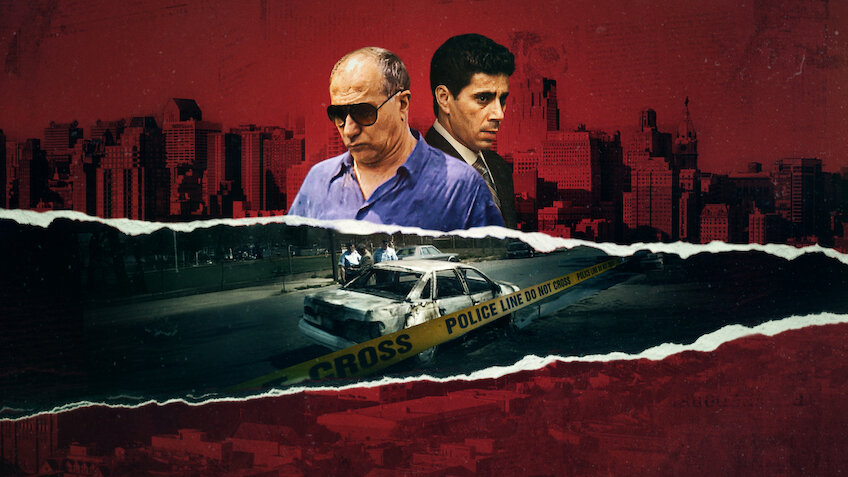

During the 1990s, the streets of Philadelphia weren’t just a backdrop for urban life; they became the battlefield for an internal mafia war so brutal and public it redefined organized crime in America. This violent chapter is the focus of a captivating new three-part docuseries, “Mob War: Philadelphia vs. the Mafia.”
The production delves into the chaos and bloodshed that erupted when a power struggle between two rival factions degenerated into an all-out war for control of the city’s crime syndicate. The series chronicles what has been described as a “Shakespearean saga of shifting loyalties, family betrayal, and deadly vendettas,” a story that “changed Philadelphia and the American Mafia forever.”
This conflict was not merely a territorial dispute but a symptom of a criminal institution in decay. The public and ruthless nature of the war marked a break from the long-held traditions of secrecy and discipline that had been the hallmark of the American Mafia, attracting unprecedented attention from law enforcement.


At the heart of this storm was a fundamental generational clash: the “old school,” represented by a veteran crime boss, against a “new generation” of fearless, flashy mobsters who had little respect for tradition and everything to prove. The docuseries promises to unravel this complex history, exploring how the struggle between tradition and modernity played out with deadly consequences in the City of Brotherly Love.
The Power Vacuum: The Twilight of the Old Dons
To understand the 90s war, it’s crucial to examine the chaos that preceded it. For two decades, the Philadelphia crime family was under the iron grip of Angelo Bruno, a boss known as “The Docile Don” for his preference for conciliation over violence. His reign brought an era of peace and prosperity, and his seat on the Mafia Commission earned him national respect.
However, resentment simmered beneath the surface. Bruno forbade his family members from direct involvement in drug trafficking, fearing the long prison sentences, yet he allowed certain associates to profit, creating a double standard that angered many subordinates.
His point-blank shotgun murder outside his home—shot behind the ear while sitting in his car—marked the bloody end of this relative calm and unleashed a spiral of violence. Ironically, the man driving the car that night was his bodyguard, John Stanfa.
Bruno’s assassination triggered a war of succession that saw his successor, Philip “The Chicken Man” Testa, killed a year later by a nail bomb. From the ashes of this chaos emerged Nicodemo “Little Nicky” Scarfo, a boss whose style was the antithesis of Bruno’s.
Scarfo’s reign, beginning in 1981, was characterized by an explosive temper and a penchant for extreme violence. Where Bruno saw murder as a last resort, for Scarfo, it was a calling card. He demanded a “street tax” from all criminals operating in his territory and didn’t hesitate to order murders over minor disputes. During his tenure, an estimated 25 family members and associates were killed.
This dramatic increase in public violence drew intense scrutiny from the FBI and other law enforcement agencies, who saw an opportunity in Scarfo’s tactics. Scarfo’s brutality not only made him a prime target but also sowed distrust within his own ranks, leading several of his men to become government informants to escape death or prison.
The eventual arrest and conviction of Scarfo and his top lieutenants on racketeering and murder charges in the late 80s decapitated the family, creating the power vacuum that John Stanfa and Joey Merlino would rush to fill. The 90s war was not an isolated event but the culmination of over a decade of instability, betrayal, and bloodshed that began the night Angelo Bruno was murdered.
Two Kings, One Throne: The Sicilian vs. the “Young Turks”
The conflict that would define the Philadelphia mafia in the 90s was personified by its two main antagonists, men who represented two different worlds, two generations, and two opposing criminal philosophies.
On one side was John Stanfa, the old-world traditionalist. Born in Caccamo, Sicily, he immigrated to the US, working as a bricklayer before finding his way into the underworld. His connection to power was direct and traditional: he was Angelo Bruno’s driver and was present, wounded, at the moment of his assassination. After the collapse of the Scarfo era, Stanfa was seen as a stabilizing figure. He was a “veteran crime boss” and an “old-school Sicilian mobster,” hand-picked by New York’s Five Families to restore order and return business to the shadows. His legitimacy came from the established hierarchy, an authority granted from the top of the Cosa Nostra.
On the other end of the spectrum was Joseph “Skinny Joey” Merlino, the archetype of the new American gangster. The son of Philadelphia underboss Chuckie Merlino, he was mafia royalty by birth. Described as a “flashy and fearless upstart” and a “party boy” who loved the good life, Merlino was charismatic, ambitious, and dangerously aware of his public image.
Unlike bosses who shunned the spotlight, Merlino sought it. He invited television crews to his annual Christmas parties for the homeless and was a regular figure at city nightclubs and sporting events, famously seen with athletes like Philadelphia Flyers star Eric Lindros. The press dubbed him the “John Gotti of Passyunk Avenue,” comparing his camera-friendly brashness to the famous New York boss.
Merlino led the so-called “Young Turks,” a group of young mobsters who chafed under Stanfa’s leadership, seeing him as a Sicilian boss to whom they felt no loyalty. The war between them was, in essence, a battle for legitimacy. Stanfa represented institutional authority, imposed from above. Merlino, in contrast, represented a populist rebellion, building his power base from the ground up through charisma, force, and a shrewd manipulation of the media. His rise marked a paradigm shift: the media-age mobster, who understood that public image was, in itself, a form of power.
The City Bleeds: Chronicle of an Urban Battle
The simmering tension between the two factions finally boiled over into an open war that transformed the streets of Philadelphia into a war zone. The battle for control wasn’t fought in secret meetings but in broad daylight, with a brazen violence that terrorized the city.
The war began to brew after John Stanfa was named boss in 1991, but the Merlino faction’s first significant strike came with the murder of Felix Bocchino on January 29, 1992. In an attempt to quell the growing rebellion, Stanfa took a risky diplomatic step: he officially inducted Joey Merlino and his top lieutenant, Michael Ciancaglini, into the crime family. Stanfa hoped he could watch them more closely and, if necessary, eliminate them more easily. However, this truce was short-lived.
The conflict erupted with uncontrollable fury in the summer of 1993. On August 5, Stanfa’s hitmen ambushed Merlino in a drive-by shooting. Merlino survived despite being shot four times in the leg and buttocks, but his friend and capo, Michael Ciancaglini, was killed beside him.
The response was swift. Less than a month later, on August 31, in an act of unprecedented audacity, Merlino’s side retaliated by attacking Stanfa and his son as they drove on the Schuylkill Expressway, one of the city’s main arteries. Stanfa was unharmed, but his son was shot in the jaw. The war had become personal and was being waged in the city’s most public spaces.
The violence continued with more murders and plots, including a failed attempt to kill Merlino with a remote-control bomb placed under his car, which failed to detonate. The conflict only began to subside when law enforcement intervened decisively, arresting Merlino in November 1993 for violating his parole and handing down a formal RICO indictment against Stanfa in March 1994, marking the beginning of the end of the war.
Behind the Scenes: The Evidence and the Witnesses
The docuseries reconstructs this bloody history through a mosaic of sources providing a 360-degree view of the conflict. The narrative is built from the testimonies of those who lived it: former mafia associates, the law enforcement agents who pursued them, the prosecutors who brought them to trial, and the journalists who covered every twist.
One of the central voices in the series is John Veasey, a hitman for the Stanfa side whose personal story encapsulates the war’s betrayal and brutality. Described as a “charming killer,” Veasey was a feared enforcer who got caught in the conflict, survived an assassination attempt by his own side—taking three bullets to the head—and ultimately became a government witness, a “rat” in mob parlance, whose testimony would be crucial in dismantling Stanfa’s organization.
His journey from loyal enforcer to star witness reveals a fundamental truth of this war: it was lost not only to bullets and arrests but to the broken promises and betrayals that annihilated loyalty. Veasey was hired to kill, but when Stanfa failed to pay him as promised and then ordered his execution, that loyalty evaporated, proving that Stanfa’s mismanagement and inability to maintain the fealty of his key men were as destructive as the FBI investigation itself.
Beyond personal accounts, the series relies on an arsenal of hard evidence gathered by the FBI. The narrative is peppered with chilling wiretap recordings, surveillance footage, and reenactments that bring the events to life. The FBI’s surveillance was so exhaustive that, at one remarkable moment, a hidden camera on a street pole captured a mob murder in real-time, providing a raw, unfiltered view of the violence plaguing the city.
By presenting this raw evidence, the docuseries does more than tell a story; it immerses the viewer in the investigation. The audience becomes a virtual jury, hearing the conspiracies in the mobsters’ own voices and seeing the crimes as they happened. This technique transforms the documentary from a mere historical retelling into an immersive, evidence-based experience that puts the viewer “in the room” alongside the FBI agents.
Endgame: The Fall of an Empire
The street war, with its public and brazen violence, was ultimately John Stanfa’s downfall. By waging such a visible battle, especially after the already notorious Scarfo era, he made his organization a top priority for the federal government.
The FBI responded with a methodical and exhaustive investigation, using the powerful RICO (Racketeer Influenced and Corrupt Organizations Act), designed to dismantle not just individual criminals but the entire “structure” of the criminal enterprise.
Federal agents employed a wide array of investigative tactics. They infiltrated mafia circles, used informants wearing hidden microphones, and conducted massive electronic surveillance, even gaining entry to a bakery to install listening devices that would capture the mobsters’ conversations.
The result of this effort was a formal indictment against Stanfa covering a litany of serious crimes: racketeering, extortion, loansharking, and multiple counts of murder and conspiracy to commit murder.
The trial that followed was as dramatic as the war itself. In a final, desperate act of intimidation, Stanfa’s side murdered William Veasey, the brother of star witness John Veasey, on the very day John was scheduled to testify. This act of violence, a classic mob tactic, was intended to silence the key witness.
However, the plan backfired spectacularly. The murder not only failed to stop the trial but also underscored the impotence of old-world intimidation tactics against a modern federal justice system, equipped with witness protection programs and an unwavering institutional will. Days after his brother’s death, a devastated but determined John Veasey took the stand and provided demolishing testimony that sealed his former boss’s fate.
Finally, on November 21, 1995, John Stanfa was found guilty on 33 of 35 counts and later sentenced to five consecutive life terms. The operation was a resounding success for law enforcement, with the conviction of more than two dozen mobsters and associates, decisively ending one of the bloodiest mafia wars in American history.
A Legacy of Blood and the New Face of the Underworld
The docuseries “Mob War: Philadelphia vs. the Mafia” not only recounts a brutal turf war but also documents a turning point that “changed Philadelphia and the American Mafia forever.” The legacy of this conflict is best summarized by the divergent fates of its two protagonists, a definitive reflection of the generational change at the heart of the battle.
John Stanfa, the old-school traditionalist who played by the rules of violence and intimidation, was permanently removed from the board. Today, in his eighties, he is serving his multiple life sentences in a federal prison, a living relic of a defeated era and a criminal approach that proved unsustainable in the modern world.
On the other hand, Joey Merlino, the new-era upstart, not only survived but thrived in his own way. Following Stanfa’s conviction, he won the war and took control of the family. Although he later served a prison sentence for racketeering, he has successfully transformed his criminal notoriety into a form of public celebrity.
In an astonishing reinvention, he now co-hosts a podcast and runs a popular cheesesteak restaurant, transitioning from a “Godfather” to a “Podfather.” To this day, he continues to deny ever being a member of the Mafia.
The contrast could not be more telling. The final victory went not to the one who wielded power most brutally, but to the one who best understood the power of image and adaptability. Merlino proved that in the 21st century, public relations and brand management skills can be more effective survival tools than the old codes of silence and violence. His story represents the new face of the underworld, one where infamy can be a commodity and survival depends as much on media savvy as on street muscle.
“Mob War: Philadelphia vs. the Mafia” premieres on Netflix on October 22.