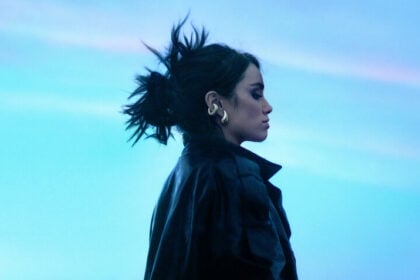

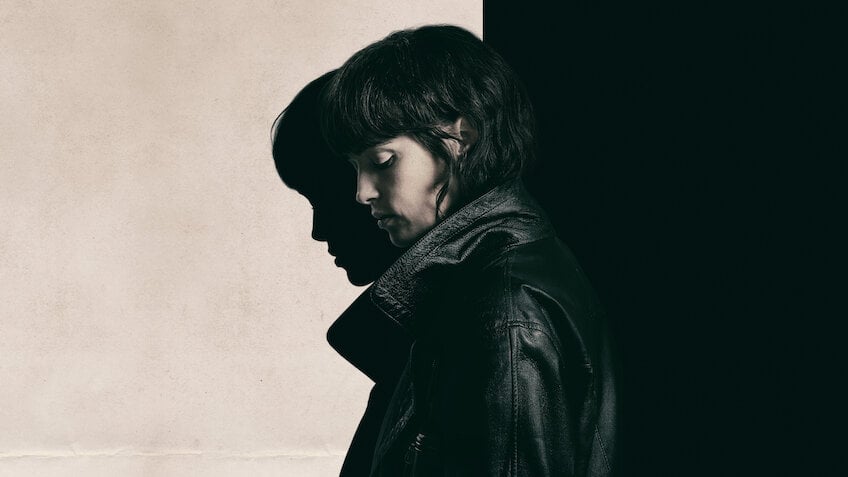

Netflix is delving into one of the darkest chapters of Spain’s recent history: the terrorist group ETA. Produced by the acclaimed Juan Antonio Bayona and directed by Agustín Díaz Yanes, the new Spanish political thriller, She Walks in the Darkness, plunges into one of the most complex and painful periods in the nation’s memory.
The film tells the story of Amaia (Susana Abaitua), a young Civil Guard officer who undertakes a decade-long infiltration mission into the terrorist organization ETA. Her high-stakes objective is of vital strategic importance: to locate the clandestine weapons caches, known as “zulos,” that the group kept hidden in southern France, a key part of their logistical and operational apparatus.
The narrative is firmly grounded in the historical, political, and social context of the 1990s and 2000s, a period of peak activity for the group that left deep social wounds. The story is inspired by the real lives and experiences of several Civil Guard members who were directly involved in the fight against terrorism, lending the account a raw and authentic foundation.


The film does not shy away from the harshness of the era. It addresses ETA’s strategic shift when, feeling that attacks on security forces were not destabilizing the state, they began systematically targeting politicians, judges, and journalists to bring terror to the “heart of the State.” In this environment of constant danger, Amaia must maintain her cover to extreme limits, facing countless threats that test her physical and psychological endurance. The film blends the tension of a spy thriller with an almost documentary-style approach, recounting real events and assassinations that defined those years.
This narrative choice is a deliberate decision to transcend a local conflict and give it a universal dimension. Producer J.A. Bayona notes that director Agustín Díaz Yanes successfully “elevates a local conflict into a universal story that can resonate with those who lived through the events as well as with viewers anywhere in the world.” By anchoring the fiction in a tangible historical reality, the film uses the authenticity of the Spanish context to explore universal themes such as personal sacrifice, loss of identity, and the fight against extremism—a key strategy for its distribution on a global platform like Netflix.
The Return of a Master of Spanish Cinema with a World-Class Team
She Walks in the Darkness stands out as a major cinematic event, not only for its subject matter but also for the caliber of the creative team behind it. The project marks the highly anticipated return to directing for Agustín Díaz Yanes, a foundational name in contemporary Spanish cinema. His acclaimed debut, Nobody Will Speak of Us When We’re Dead, earned him Goya Awards for Best New Director and Best Original Screenplay, establishing him as a significant authorial voice. After directing the epic Alatriste and the adventure-drama Gold, his return with a work of this magnitude places him once again at the center of the cultural conversation. Díaz Yanes takes full authorial control, not only directing but also writing the screenplay.
The project’s ambition is underscored by its production team. The film is produced by J.A. Bayona, Belén Atienza, and Sandra Hermida, the same trio responsible for the internationally acclaimed success Society of the Snow. Their involvement guarantees a “large-scale production” and a globally recognized seal of quality. The production company is Basoilarraren Filmak, in close collaboration with Netflix.
The Psychological Challenge of Susana Abaitua
At the heart of the narrative storm of She Walks in the Darkness is the character of Amaia, whose psychological complexity presents a formidable acting challenge. What do you do when you’re undercover in ETA for 12 years? You can’t attend your father’s funeral, you can’t be there for anything—you’re stuck with people who could kill you at any moment.
For actress Susana Abaitua, bringing Amaia to life required an unprecedented level of immersion, calling it “the most preparatory work I’ve ever had to do for a character.” Her process focused on moving beyond the archetype of the undercover agent to find her human core. By exploring the motivations that would drive a person to such an extreme sacrifice, Abaitua developed a performance that goes beyond duty or ideology. She describes a devastating duality: the intensity of the mission makes her feel alive, contrasting with the feeling of being “shut down” when she returns to a normal life that no longer feels like her own. This idea of getting “hooked on living in these kinds of situations” is what sustains the character through the years.
This insight is crucial to understanding the film’s original Spanish title (Un fantasma en la batalla or “A Ghost in the Battle”). The “ghost” is not just an agent invisible to the enemy, but a person who has lost her own essence, whose identity has vanished into the mission. The “battle” is not only against ETA but also a constant internal struggle to keep from disappearing completely, where the adrenaline of danger becomes the only anchor to the feeling of being alive.
A Mosaic of Loyalties and Betrayals: The Ensemble Cast
Although the story pivots on Amaia’s experience, She Walks in the Darkness relies on a strong ensemble cast that shapes the world of loyalties and dangers surrounding her. Acclaimed actors such as Andrés Gertrúdix, Raúl Arévalo, and Ariadna Gil round out the main cast, bringing depth and solidity to the thriller.
However, the dramatic pillar of the plot lies in the complex relationship that forms between the undercover agent, Amaia, and Begoña, a convinced terrorist played by actress Iraia Elias. Despite being on irreconcilable ideological extremes, their shared life and constant danger lead them to “end up forming a real bond.” This dynamic is the true emotional and moral heart of the film.
The movie consciously avoids black-and-white portrayals. The screenplay explores human complexity in extreme situations: “people are not black or white, there are all sorts of gray areas. The thing is, these two people are at an extreme; they have made extreme decisions. We had to try to understand all of that.” The existence of this “real bond” between the infiltrator and her target is the main driver of the protagonist’s internal conflict. This connection constantly tests Amaia’s loyalty to her mission, blurs the lines between her real and fictitious identities, and humanizes someone who, from a distance, would simply be “the enemy.” The true battle for this “ghost” is not just the risk of being discovered, but the psychological cost of betraying someone with whom she has forged a genuine connection, forcing her to confront the dilemma between fulfilling her duty and preserving what remains of her own humanity.
A Film Shoot Marked by Respect and a Search for Authenticity
From the outset, the production of She Walks in the Darkness was marked by a deep respect for the sensitivity of its subject matter. The team was fully aware of the responsibility involved in telling a story about the open wounds of terrorism. To facilitate this careful and introspective work, the production offered conditions that are rare in today’s industry. This calm and trusting environment, actively fostered by the producers, was essential for the actors to explore the complexity of their characters without the usual commercial pressures.
The quest for authenticity was also reflected in the choice of locations. The film was shot in real settings in the Spanish and French Basque Country, including the Navarrese town of Bera and the city of San Sebastián. Director Agustín Díaz Yanes has mentioned using up to 70 different locations, an experience he describes as “fantastic” and one that undoubtedly enriches the film’s atmosphere and verisimilitude.
The way the film was made is inseparable from the story it tells. A narrative about deep trauma required a patient and thoughtful creative process. The time and freedom granted by the production were not a luxury but a methodological necessity to approach the subject with the seriousness it deserved. This allowed Díaz Yanes to develop his cinematic style, which values “quiet moments” and sustained shots where emotion is built through stillness and a character’s gaze.
Global Premiere
Before reaching a mass audience, She Walks in the Darkness had a distinguished debut. The film celebrated its premiere in the Official Section of the prestigious San Sebastián Film Festival, where it was met with applause, earning a significant seal of quality and generating great anticipation. The launch strategy included a limited release in Spanish cinemas, allowing the work to be seen on the big screen before its global distribution.
The film premieres on Netflix on October 17.