


As everyone knows, a ton of cocaine can change anyone’s life, and the same was true for the residents of the quiet community of Rabo de Peixe. In the heart of the Atlantic, on the small, isolated Azorean island, their lives would never be the same after that fateful ton of “coke” washed ashore.
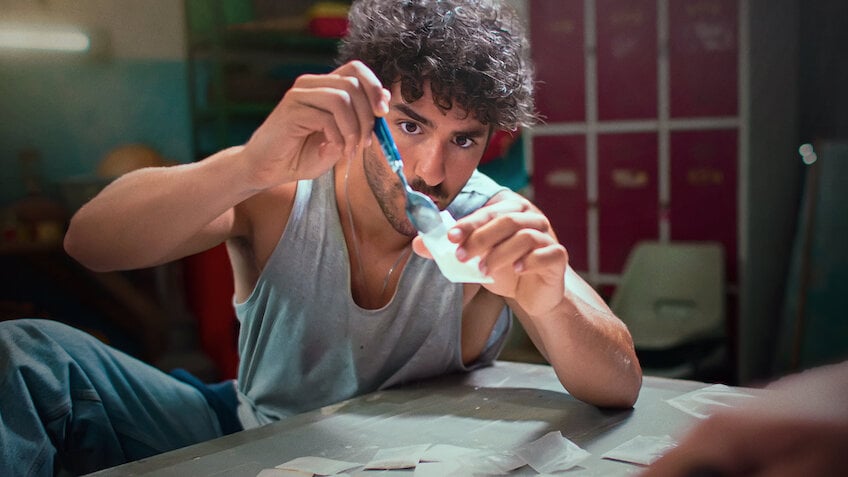
The first season of the Portuguese series “Turn of the Tide” was anchored in a premise as incredible as it was true: the wreck of a boat carrying a ton of pure cocaine off its coast. This twist of fate presented Eduardo, a young fisherman, and his inseparable group of friends—Sílvia, Rafael, and Carlinhos—with an opportunity as dangerous as it was tempting: use the drugs to escape a life of limitations and make their impossible dreams come true.
The narrative is built on the human element in the midst of growing chaos. The protagonists are not seasoned criminals but young people united by a childhood friendship, whose only capital is their mutual loyalty. This emotional foundation drives the plot, turning their foray into drug trafficking into a desperate adventure rather than an act of calculated malice.


However, their decision to sell the cocaine unleashes a perfect storm of threats. On one hand, they face the law, embodied by the tenacious Inspector Frias, who arrives in town to investigate the sudden influx of drugs. On the other, and far more lethally, they become the target of the shipment’s original owners, a group of Italian drug traffickers led by the ruthless Monti, who will stop at nothing to recover what is his.
The Azores archipelago, with its natural beauty and geographical isolation, functions as a gilded cage. The very island that offers them a unique opportunity becomes their prison, amplifying the tension and the feeling that there is no clean escape. This inherent claustrophobia raises the stakes, making every decision the group makes feel definitive and irreversible.
The series’ driving force lies in its ability to transform a real-life public health disaster into a high-octane thriller. The historical event that inspires the fiction was a community tragedy marked by overdoses, deaths, and an addiction crisis that left lasting scars on the population, where high-purity cocaine was sold in beer glasses for a paltry sum. However, the series chooses to frame the story through the prism of adventure and aspiration, focusing on the “fun, emotional, and united spirit” of the group of friends seeking to fulfill their dreams. This tonal choice creates a complex and morally ambiguous narrative experience, inviting the viewer to follow the protagonists on their perilous odyssey while remaining aware of the devastating consequences their actions emulate.
A New Direction: The Plot Thickens in Season Two
The second season of “Turn of the Tide” doesn’t pick up immediately where it left off. Instead, it jumps three months forward, a period in which the fragile balance of power on the island has been completely upended. The plot restarts with the return of Eduardo, who had managed to escape at the end of the first installment. What he finds upon his return is a “completely different reality,” a new order that threatens to destroy everything he and his friends tried to build.
The central conflict of the new season is established immediately: the cocaine that Eduardo had managed to hide is no longer under the control of his former partner, Uncle Joe. In his absence, the valuable shipment has fallen into the hands of an “unexpected enemy.” This revelation not only introduces a new antagonist but also completely redefines the rules of the game. The protagonists are no longer fighting to capitalize on a heaven-sent opportunity; they must now confront an organized force that has wrested control from them, forcing them to fight from a position of disadvantage.
This new scenario tests the series’ fundamental pillar: the group’s loyalty. If the first season focused on their unity against external threats, the synopsis for the second suggests that fractures will begin to appear from within. The pressure exerted by this new adversary and the changing circumstances will “test the bonds of friendship and loyalty of the group.” The trust between Eduardo, Sílvia, Carlinhos, and Rafael will become a battlefield as dangerous as the confrontations with traffickers or the police.
Amid this chaos, a new business opportunity arises, posing a crucial and recurring question: “Is it really just one more time?” This question suggests that the characters, led by an Eduardo who refuses to give up, will once again be seduced by the promise of wealth and freedom that the drugs offer. This time, however, they are not acting out of naivety. They have experienced firsthand the violence and danger that their enterprise entails. Their decision to try again sets up a potentially tragic narrative arc, where ambition may lead them to underestimate the consequences of a cycle from which it seems impossible to escape. The narrative thus shifts from the thrilling discovery of an opportunity to the grim reality of dealing with its inescapable consequences.
The plot will also draw on loose threads from the previous season. Monti’s pursuit to recover his drugs remains a latent threat, and with Eduardo off the map for a while, his attention may have shifted to Sílvia, who remained on the island. Furthermore, Sílvia’s pregnancy, revealed in the first season, adds a layer of vulnerability and personal urgency to her character, promising an evolution that goes beyond her role as Eduardo’s romantic interest. Meanwhile, Uncle Joe, stripped of the merchandise, becomes an unpredictable piece on this new board, with the potential to ally with or confront anyone in his attempt to regain his position.
Familiar Faces and New Alliances: The Cast Expands
The continuity of “Turn of the Tide” is assured by the return of its core cast, the quartet of friends who give the story its soul. José Condessa reprises his role as the ambitious leader Eduardo, alongside Helena Caldeira as the pragmatic Sílvia, Rodrigo Tomás as the impulsive Rafael, and André Leitão as the loyal Carlinhos. They are joined again by Kelly Bailey in the role of Bruna, completing the inner circle of characters whose dynamic defines the series.
The show’s universe also brings back the key figures representing the external forces harassing the group. Maria João Bastos returns as Inspector Frias, the tireless representative of the law, while Pêpê Rapazote once again embodies Uncle Joe, whose ambiguous morality makes him an unpredictable ally and adversary. Afonso Pimentel also reprises his role as Ian, ensuring that the conflicts established in the first season continue to evolve and gain complexity.
The most significant new development for the second season is the addition of a notable contingent of new actors, a mix of high-profile Portuguese and Brazilian talent that promises to enrich the plot. Among the new faces are acclaimed Portuguese actors José Raposo and Ricardo Pereira, along with Brazilian actor Caio Blat. However, the most prominent addition is Brazilian star Paolla Oliveira, who has been assigned a “powerful and surprising role.” This description suggests her character will be a central figure in the new season, possibly embodying that “unexpected enemy” who now controls the cocaine and directly challenges Eduardo.
This cast expansion is not just a creative decision to introduce new storylines. The inclusion of top-tier stars from Brazil, like Oliveira and Blat, represents a calculated strategic move. Following the global success of the first season, which reached the most-watched lists in 33 countries, incorporating Brazilian talent aims to consolidate and expand the series’ audience in the world’s largest Portuguese-speaking market. This approach transforms “Turn of the Tide” from a successful Portuguese product into a premier pan-Lusophone production, maximizing its reach and cultural impact worldwide.
Behind the Camera
The artistic consistency of “Turn of the Tide” is maintained thanks to the continued involvement of its creator, Augusto Fraga. As co-writer and director of several episodes, Fraga remains the primary creative force behind the series, ensuring that the tone, rhythm, and visual aesthetic that defined the first season are preserved in this new installment. The production company Ukbar Filmes also continues to helm the project, providing the necessary stability for a production of this scale.
Nevertheless, the creative team has also expanded. For the second season, João Maia has joined as a co-director. The addition of a new director can bring a fresh perspective and new visual ideas, enriching the series’ cinematic language without deviating from the original vision established by Fraga.
Once again, filming has taken place entirely in the Azores, cementing the archipelago not just as a backdrop but as a fundamental narrative element. The dramatic and unique landscapes of São Miguel island—from the boiling volcanic calderas of Furnas to the lush tea plantations of Porto Formoso and the imposing coastal cliffs—are deeply integrated into the story. Specific locations are associated with key characters and moments: the Furnas calderas with the menacing Arruda, the islet of Vila Franca do Campo with an escape route, and the port of Ponta Delgada as the nerve center of operations.
This deep connection between fiction and place has generated a tangible impact in the real world. The series has put the Azores on the map for a global audience, to the point that the city of Ribeira Grande has launched an official tourist itinerary that traces the main filming locations as a way to boost the local economy. A symbiotic relationship has been created: the series draws its visual identity and unique atmosphere from the Azorean landscapes, and in return, its international success is redefining the global perception and tourist appeal of the islands. The setting is not merely decorative; it is an indispensable part of the DNA of “Turn of the Tide” and a key component of its growing legacy.
The Future of the Saga: A Franchise Strategy and a Glimpse at the Truth
The commitment to “Turn of the Tide” goes far beyond a simple season renewal. In an unprecedented show of confidence, a third season of the series has already been confirmed and filmed. This announcement, made even before the premiere of the second installment, is a clear signal that there is a long-term investment in the property, with a vision that transcends the usual cycle of production and evaluation.
This strategy is reinforced by the creation of complementary content designed to expand the series’ universe. Coinciding with the launch of the second season, a documentary titled “Turn of the Tide: The Surreal Story of Rabo de Peixe” will be released. This production will offer viewers the opportunity to “delve into the real story that inspired the fiction,” providing a factual and detailed context of the incredible event that gave rise to the saga. By launching the new season and the documentary simultaneously, a comprehensive viewing event is being orchestrated.
Action and Adventure You Can’t Miss
The second season of “Turn of the Tide” arrives as more than just the continuation of a success story. It is the consolidation of a cultural and industrial phenomenon. The series combines a gripping narrative rooted in a real event, a cast reinforced with international-caliber talent, and the backing of a long-term strategy that seeks to cement its place as a lasting global franchise.
With new and powerful enemies on the horizon, friendships on the verge of breaking, and the fate of an entire community at stake, the stage is set for a new chapter that promises to be even more dramatic and consequential in the saga of Eduardo and his friends.
The second season of “Turn of the Tide” premieres worldwide on Netflix on October 17.