


From redefining twenty-first-century horror with Saw, Insidious, and The Conjuring Universe to steering billion-dollar action and superhero spectacles, the Aquaman and Furious 7 filmmaker has turned precision genre craft into a durable, global business model.
The Career Blueprint of a Cross-Genre Hitmaker
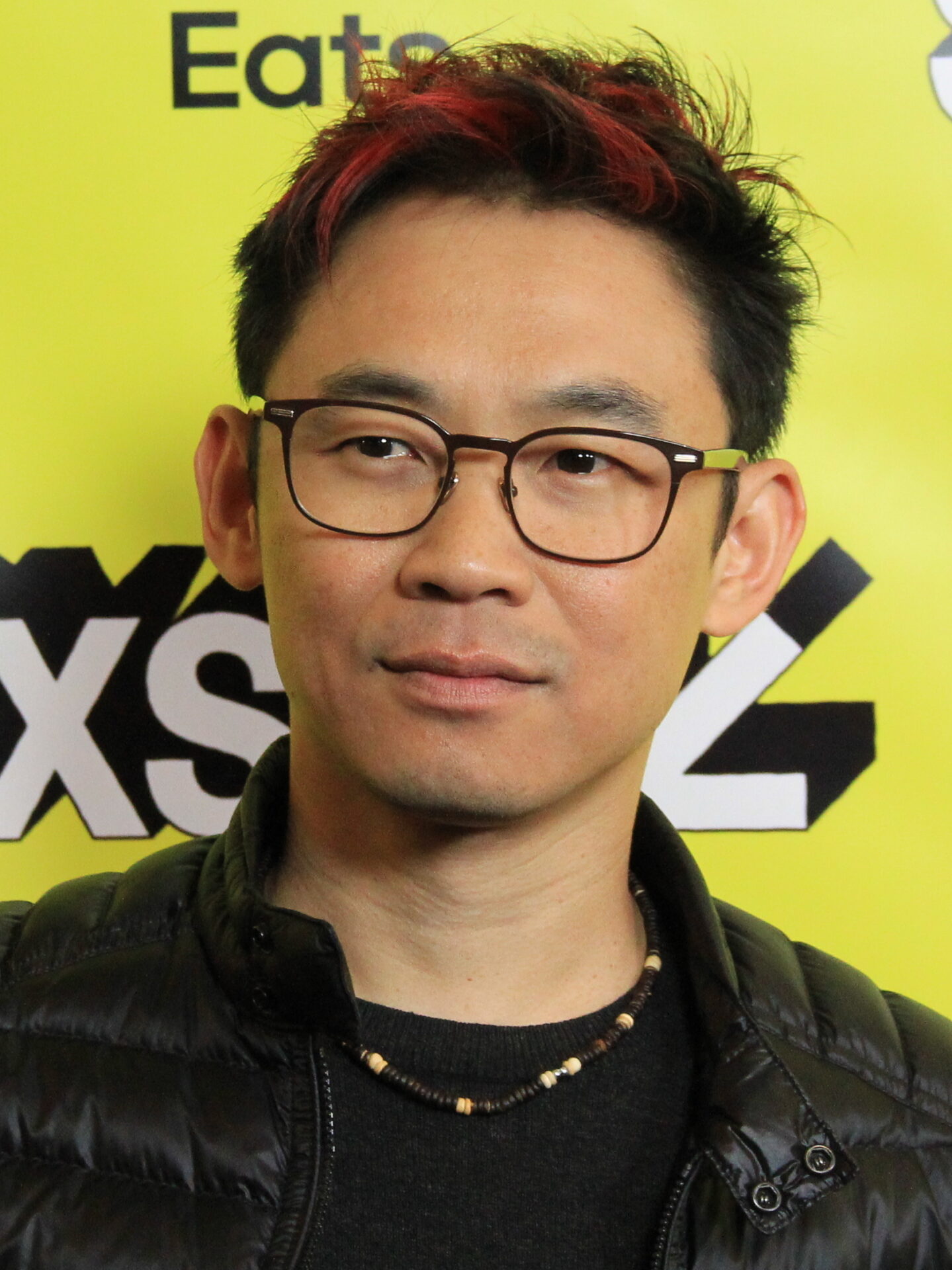
Over the last two decades, James Wan has moved with unusual fluency between microbudget nightmares and studio behemoths, retooling the nuts and bolts of genre cinema for a multiplex era dominated by recognizable intellectual property. His name now functions as a stamp of reliability: a promise of cleanly engineered suspense, high-concept world-building, and set pieces designed to land with equal force on Friday-night crowds and holiday IMAX audiences. The body of work is unusually balanced. On one side sits a run of lean, formally exacting horror films that seeded multiple franchises; on the other, a pair of mega-hits in the action and superhero lanes. In the middle is a production empire—Atomic Monster—that develops horror at scale and, after its merger with Blumhouse, helps define how genre storytelling is conceived, financed, and marketed across platforms. This article traces Wan’s professional arc—film by film and franchise by franchise—focusing on how he directs, produces, and strategizes for longevity.
Breakthrough on a Shoestring: Saw and Precision on a Budget
Wan’s feature-scale career begins with Saw (2004), expanded from a proof-of-concept short into a claustrophobic thriller that extracts dread from perspective, editing rhythms, and a late-arriving structural reveal. What made Saw transformational was not just a twist ending but a method—compress the footprint, design scares around camera grammar and sound, and build a mythology with multiple off-ramps for sequels. The film’s industrial impact arrived immediately. It became a perennial Halloween fixture, energized a studio pipeline, and demonstrated that a meticulously engineered concept can sustain sequelization for over a decade. The franchise that followed proved that careful orchestration of tone, iconography, and rules can yield a durable commercial engine while keeping budgets disciplined.



Course Correction, Not Collapse: Dead Silence and Death Sentence
The 2007 duo of Dead Silence and Death Sentence is often framed as a stumble after the Saw rocket ride. In career terms, it looks more like a research and development phase. The former sharpened Wan’s old-dark-house instincts and fascination with totemic props; the latter tested muscular coverage, chase dynamics, and geographic action continuity. Both films reinforced a principle that would become foundational in Wan’s work: if a story world is anchored by a strong central object—a puppet, a mask, a symbol—you gain an icon that can migrate across sequels, marketing cycles, and spin-offs. The lessons would resurface, refined, in the years ahead.
Reinvention Through Restraint: Insidious and the PG-13 Supernatural Reset
With Insidious (2010) and Insidious: Chapter 2 (2013), Wan pivoted from baroque traps to a soft-glow approach, proving that suggestion can rattle audiences as effectively as splatter. These films build on negative space and sonic architecture—pregnant silences, off-screen clatter, and the uncanny stillness of tableaux that seem to move when the viewer blinks. The mythology of the Further provided a modular canvas: characters, demons, and rules could be recombined in later entries without exhausting the premise. Wan directed the initial chapters, then moved into producer-showrunner mode as the series extended its reach, demonstrating a pattern that would define his career—author a world, establish its grammar, then scale it through a framework others can operate.
From Scare to System: The Conjuring and the Birth of a Shared Horror Universe
The Conjuring (2013) transformed Wan from reliable horror stylist to architect of a large-scale, interlinked universe. Grounded in case-file procedural structure—investigators identify a haunting, research the entity, confront it—the film provided a flexible engine for sequels and prequels. The decisive move was to elevate side characters and haunted artifacts into headliners: Annabelle, The Nun, and other spin-offs proved that the brand could sustain multiple sub-labels with different subgenre flavors while preserving a unified tone. Alternating core chapters with spin-offs kept the brand present in theaters, broadened tonal range, and trained audiences to expect new entries that felt connected but not repetitive. Across the 2010s and into the 2020s, The Conjuring Universe grew into one of the most successful horror franchises in history, its serial durability anchored by disciplined budgets, signature iconography, and steady brand stewardship.
A Leap Across Lanes: Furious 7 and Global-Scale Action
When Universal tapped Wan to direct Furious 7 (2015), it looked like a cross-assignment: a horror specialist inheriting a muscle-car juggernaut mid-stride. In practice, it showcased skills he had been refining since Saw: clean spatial logic, propulsion through frame direction, and set-piece escalation that reads in any language. The film balanced audacity—cars vaulting across Abu Dhabi skyscrapers—with emotional clarity, completing a beloved star’s storyline while delivering crowd-pleasing catharsis. The global response validated Wan’s ability to manage multiple second-unit teams, heavy visual-effects integration, and globe-trotting logistics without sacrificing character beats. The commercial outcome placed Wan among a small cadre of directors trusted to deliver massive four-quadrant spectacles on time and at scale.
Superhero World-Building at Operatic Scale: Aquaman and Its Sequel
Wan’s next leap was to DC’s undersea mythos with Aquaman (2018). He fused swashbuckling adventure with planetary fantasy, borrowing from sword-and-sorcery staging and creature-feature exuberance to render Atlantis as a coherent biosphere rather than a digital abstraction. The film’s painterly color palette, geographic readability, and pulpy creature design set it apart in a superhero landscape that often defaulted to muted palettes and monolithic showdowns. The result vaulted past major box-office milestones and established the character’s viability as an international headliner. Wan returned for Aquaman and the Lost Kingdom (2023), closing out an era with a sequel that leaned into brotherhood dynamics, world-expanding ecosystems, and large-scale CG orchestration. While it did not match the original’s record-setting run, the sequel reaffirmed Wan’s capacity to balance spectacle with human stakes.
The Producer as a Brand: Atomic Monster’s Rise and a New Industrial Alignment
Parallel to his directing portfolio, Wan built a second track as a producer and company principal. Atomic Monster was founded to incubate high-concept genre at manageable budgets, to serve as a proving ground for talent, and to develop IP with repeatability. The strategy is ruthlessly simple: keep per-picture costs in a disciplined band, design for franchise potential without promising it, and treat theatrical and streaming windows as complementary tools rather than rival formats. The company became a consistent supplier of Conjuring spin-offs and original chillers, and it expanded into action-adjacent projects and television. The subsequent merger of Atomic Monster and Blumhouse formalized a partnership that had long existed in spirit: align two compatible pipelines to create a federated genre studio with deep resources and nimble decision-making. The combined slate underscored a shared philosophy—director-driven development, mythologies that can scale, and marketing hooks baked into the concept stage.
Originals and Experiments in the 2020s: Malignant, M3GAN, and Beyond
Even after massive tentpoles, Wan returned to horror with experimental energy. Malignant (2021) paid homage to giallo textures and early-’80s body horror, embracing tonal whiplash and midnight-movie swagger. The film’s cult afterlife highlighted a trait that has shadowed Wan’s career from the beginning: a willingness to risk divisive reactions in pursuit of memorable images and bold structural swings. As a producer and story originator, he helped engineer M3GAN (2023), a techno-thriller whose deadpan, dancing AI doll became a viral marketing phenomenon before opening weekend. With a lean budget and outsized return, M3GAN reaffirmed the classic Wan rule: awareness is king, but repeatability is queen. The property’s rapid sequelization confirmed that a sharp hook plus disciplined spend can still convert into a sustainable mini-universe.
Franchise Stewardship in Motion: Insidious, The Nun, and the Warren Case Files
Wan’s influence on Insidious continued into the 2020s as the franchise returned to its original family and lore with Insidious: The Red Door (2023). The move demonstrated how nostalgia and continuity, when governed carefully, can refresh a long-running series without collapsing into self-reference. In the Conjuring lane, side-label chapters such as The Nun II extended the demon-nun arc while core case-file entries maintained the Warren throughline, reaffirming a pattern of alternating tentpoles and spin-offs to keep the brand in market with tonal variety. That cadence—anchor chapters interleaved with sub-brand explorations—has kept the universe productive without exhausting its foundations.
Television, Games, and Cross-Media Pipelines
The producer pipeline now reaches beyond features. Development has extended into television series tied to existing brands and into game-world adaptations with built-in communities. The logic resembles Wan’s film strategy: locate durable concepts, pair them with directors and showrunners who understand genre mechanics, and build modular story worlds that can expand or contract with marketplace conditions. As streaming platforms shift their priorities, Atomic Monster’s cross-media posture allows properties to be positioned where they are likeliest to build momentum—sometimes by launching small and scaling after audience proof, other times by leveraging theatrical noise to drive downstream engagement.
How James Wan Directs: Technique, Rhythm, and Readability
Across Wan’s filmography, certain directorial constants recur. He favors long, creeping moves that reveal space piece by piece, letting the audience map a room before he violates that map. He uses sound not only as scare punctuation but as architecture—floorboard creaks, off-screen music boxes, the quiet rush of an unseen presence—to guide attention and prime reactions. Iconography is never an afterthought: a puppet’s leer, a nun’s habit, a superhero trident—these are visual anchors that persist across sequels and marketing cycles, becoming memes as much as motifs. In action chapters, the same clarity applies: geography is established before chaos begins, so escalation feels earned. Emotional beats remain readable amid spectacle; archetypal stakes—families threatened and restored, siblings divided and reconciled—give the fireworks a spine.
Producing Philosophy: Systems Over One-Off Miracles
As a producer, Wan applies a director’s discipline to slate management. Budgets are kept within a band where even a middling performance can break even, and an outlier hit outperforms expectations. Talent pipelines are central: new directors are given a platform within established labels, then rotated onto originals to refresh style without losing brand voice. Mythology is treated like software—versioned, documented, and expandable—so that spin-offs can graft onto canon without disruptive retcons. Marketing alignment starts at the script stage: a hallway glide, a prop reveal, a silhouette that reads in a single image. These elements double as crowd-pleasers and campaign assets, compressing the gap between creative intent and audience recognition.
Case Studies in Scale: Why Furious 7 and Aquaman Worked
Furious 7 inherited momentum and a crisis and turned both into fuel. The film’s signature sequences operate as lessons in spatial escalation: a paraplane drop that clarifies vector, a skyscraper jump that balances absurdity with shot-to-shot logic, a finale that braids parallel showdowns into a single kinetic argument. Catharsis and kinetics are balanced so that payoff lands for diehards and casual viewers alike. Aquaman operated on a different axis: color, creature ecology, and coherent cityscapes. By treating Atlantis as a living biosphere—distinct kingdoms, species hierarchies, and transport networks—the movie avoided the weightlessness that can plague effects-driven worlds. The result felt tactile even when it was fantastical.
The Numbers Story and the Rarity of Cross-Genre Dominance
Few directors can claim authorship of multiple enduring franchises across different genres. Wan’s portfolio includes horror universes with household-name icons, a record-setting chapter in a global action series, and a superhero epic that crossed the most scrutinized commercial threshold in modern studio filmmaking. The cumulative picture is not simply of a filmmaker who can scare or dazzle, but of an operator who builds systems that others can sustain. The balance between authorial signature and scalable infrastructure is the core of his durability.
A Playbook Others Now Follow
Wan’s influence is visible in the resurgence of PG-13 supernatural horror, in the rise of object-centric scares as franchise anchors, and in the renewed confidence studios have placed in shared horror universes. It is also present in marketing practice: teasers that hinge on one killer image, trailers that function as rhythm studies, release calendars that alternate anchors with spin-offs to avoid audience fatigue. In a market where attention is scarce and production risk is rising, Wan’s model—design for clarity, price for repeatability, and cultivate mythology—has become industry doctrine.
The Road Ahead: Scale, Synergy, and Selectivity
From literary adaptations to game-world integrations and continued expansions of existing labels, Wan’s next phase looks less like a reinvention than a deepening of method. The Atomic Monster–Blumhouse alignment creates a federated genre studio capable of operating with both muscle and agility, moving projects to the partners and platforms that best fit their risk profile. On the directing front, Wan remains among the few trusted to helm nine-figure productions without forfeiting legibility or emotional connection. Whether the canvas is another superhero saga, an original supernatural concept, or a return to action, the throughline remains intact: precision craft in the service of mass engagement.
A System for Scares—and Spectacle
James Wan’s career reads like an operations manual for twenty-first-century genre cinema. Start with a ruthlessly engineered premise. Design images and sounds that travel across borders. Keep budgets disciplined and mythologies modular. When the moment comes, scale the same aesthetics—shot clarity, emotional beats, iconography—up to blockbuster size without abandoning the principles that made the small films work. That approach has yielded a portfolio with rare breadth: franchise-founding horror, record-setting action, and a billion-dollar superhero world; a production company that now sits at the center of studio horror; and a name that functions as both brand and imprimatur. Whether audiences are bracing for a jump scare in a creaking hallway or buckling in for a chase across rooftops and oceans, a James Wan project still promises the same thing it did at the start: a ride built with care, tuned for reaction, and delivered with the confidence of a filmmaker who knows exactly when—and how—to make a crowd lean forward.