

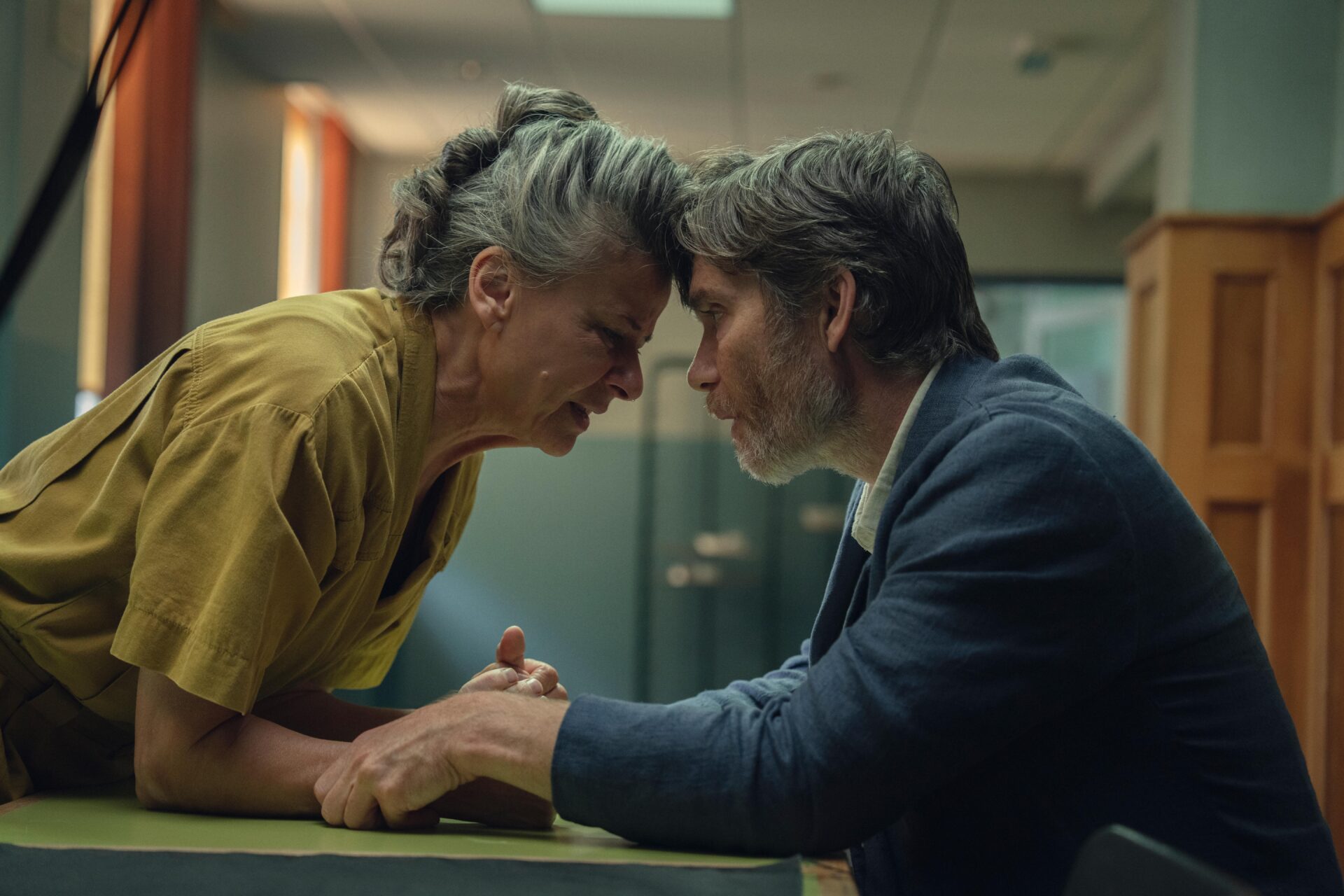

In the English countryside of the mid-1990s lies Stanton Wood, a reformatory for teenagers that represents the last chance for youths with behavioral problems. At the head of this institution is Steve, its director, a man consumed by an absolute dedication to his work.
Portrayed by Cillian Murphy, Steve is introduced from the very first scene not as a pedagogical hero, but as an individual on the verge of collapse. When a documentary crew asks him to describe himself in three words, his response is stark: “very, very tired.” This admission of exhaustion serves as a prologue to an intense drama that unfolds entirely over the course of a single, chaotic day.
The narrative of “Steve” focuses on the dual crisis besieging its protagonist. On one hand, he faces a desperate external battle to save Stanton Wood from imminent closure due to financial problems and a lack of institutional support. On the other, he wages a silent, internal war against his deteriorating mental health, a struggle that threatens to drag him into the same abyss from which he tries to rescue his students. The film immerses the viewer in the whirlwind of this decisive day, exploring the fragility of both the young people marginalized by the system and the man who has sworn to protect them.
Mais artigos


The Fight for Stanton Wood
The core plot of “Steve” is built around the parallel journeys of two characters whose internal struggles mirror each other: Steve and a student named Shy. Stanton Wood is not a conventional school; it is a last-resort institution for young people facing complex social and behavioral challenges, a place the world seems to have forgotten.
The story unfolds under the immense pressure of a potential permanent closure, forcing Steve to navigate an emotional and bureaucratic minefield. His personal battle manifests as a dependence on alcohol or drugs, a coping mechanism that leaves him as vulnerable as the boys in his care.
Into this context comes Shy, played by Jay Lycurgo, a troubled teen caught between a turbulent past and an uncertain future, grappling with impulses of violence and self-destruction. Isolated from his family and bullied by his peers, Shy embodies the desperation that permeates the institution. The dynamic between the two characters crystallizes the film’s central tension. In an attempt to connect, Steve assures him, “Because you’re not alone, Shy.” The young man’s reply is a direct challenge that disarms the educator: “What about you, Steve? Let’s talk about you.” This exchange reveals that the lines between caregiver and cared-for are dangerously blurred.
Stanton Wood’s already fragile stability is completely upended by the arrival of a film crew intending to make a documentary about the school. Far from being passive observers, their presence acts as a catalyst for chaos. The bulky cameras of the era, which justify the 1990s setting, become an intrusive element that invades the students’ privacy and incites them to perform for the audience. This “invasion” threatens to expose the center’s cracks to taxpayers, adding a layer of public scrutiny to the internal pressure. The documentary crew doesn’t just record the story; they alter and accelerate it, externalizing the characters’ internal pressures and precipitating the crisis. In this high-stakes environment, the film tackles themes like bullying, violence, lack of institutional support, and teen suicide with a raw and sensitive approach.

From Page to Screen: The Metamorphosis of ‘Shy’
The genesis of “Steve” lies in the acclaimed novella “Shy,” published by author Max Porter. However, the film is not a literal adaptation but a conscious reinvention of the original work. The most significant and defining change in the project is a fundamental shift in narrative perspective.
Porter’s novella is written entirely in the first person, immersing the reader in the stream of consciousness and subjective experience of the teenager, Shy. For the film version, the decision was made to “turn the story on its axis” to tell it predominantly from the point of view of the school’s director, Steve. This artistic choice transforms the essence of the story. By shifting the focus from the troubled youth to the caregiver in crisis, the narrative evolves from a story about teenage angst into a profound examination of the often-invisible psychological burden carried by educators. The film is no longer just about the “lost boys,” but also about the “lost” man trying to save them.
Cillian Murphy’s involvement in the project was deep and personal from the start. A close friend of Porter, Murphy received a galley copy of the novel even before its publication, and his reaction was visceral. “It just broke my heart,” the actor stated, an emotional connection that became the cornerstone for bringing the story to the screen.
Anatomy of a Creative Collaboration
“Steve” is the result of a network of long-standing professional relationships, a project born from the trust and shared vision of its three creative pillars: Cillian Murphy, director Tim Mielants, and writer Max Porter. It is not a studio commission but the product of a carefully cultivated artistic ecosystem. The film marks the first official project from Big Things Films, the production company founded by Murphy with his collaborator Alan Moloney, demonstrating a desire for creative control and the pursuit of stories with personal meaning.
The relationship between Murphy and Mielants was forged on previous projects like the film “Small Things Like These” and the series “Peaky Blinders.” Their working method is based on challenging each other. “We try to push one another. We love to take the scary routes, to make bold choices,” says Mielants. Mielants’ connection to the story is also deeply personal; he describes himself as a “lost cause” in his youth due to dyslexia and credits his salvation to teachers who refused to give up on him. For the director, the film is “a love letter” to those educators.
Meanwhile, Murphy’s collaboration with Max Porter extends beyond this film. This process, which operated within a closed circle of trusted partners, suggests a deliberate strategy by Murphy to build a sustainable model of artistic creation. Instead of operating as an “actor for hire,” he positions himself as a creative architect, using his influence to bring to life projects that might not otherwise find a place in the traditional studio system.
Cillian Murphy: Portrait of a Fractured Educator
Cillian Murphy’s performance delves into the complex psyche of a man who is, in his own words, “intensely human.” Far from any heroic archetype, Murphy builds Steve as a character full of flaws and contradictions, someone who is “just struggling” and “trying to get through the day.”
The actor explores the paradox of a caregiver who, due to his own fragility, perhaps shouldn’t be in charge of vulnerable young people. “I don’t know if you can fix other people before you’ve looked after yourself,” Murphy reflects on his character, encapsulating the film’s central dilemma. Steve is a man who puts the needs of others before his own, a noble quality that in his case becomes a path to self-destruction. His vulnerability is such that, according to the actor himself, “he probably shouldn’t be supervising a bunch of fragile, vulnerable boys, because he is so fragile and vulnerable himself.”
This view of the character is fed by a very deep personal connection for Murphy, whose family is rooted in the world of education: his parents were teachers, his grandfather was a headmaster, and nearly all of his aunts and uncles are educators. The construction of the character also involved considerable physical effort to communicate the toll the job takes on Steve’s body, a challenge Murphy acknowledges.
Cast and Characters
Although the film bears its protagonist’s name, the story is enriched by a strong supporting cast that brings the Stanton Wood community to life. Jay Lycurgo, in the role of Shy, emerges as a co-starring force. His portrayal of the teenager’s fragile mental health has been described as having a “painful and raw honesty.”
The school staff is represented by a group of veteran actresses who bring different nuances to the institutional dynamic. Tracey Ullman plays Amanda, the frank and direct second-in-command to Steve. Emily Watson portrays Jenny, a patient therapist or school counselor. And Simbi Ajikawo, better known as the rapper Little Simz, plays Shola, a new teacher confronting the harsh reality of the institution.
The student body was cast with an approach that sought maximum realism, combining young actors with others who had no prior acting experience. Cillian Murphy describes how this group of young men developed an authentic chemistry on set, becoming a real “gang.” This mix of professional talent and new voices reinforces the raw and truthful nature of a story that seeks to resonate with the vulnerability of its characters.
“Steve” premieres globally on Netflix on October 3.