

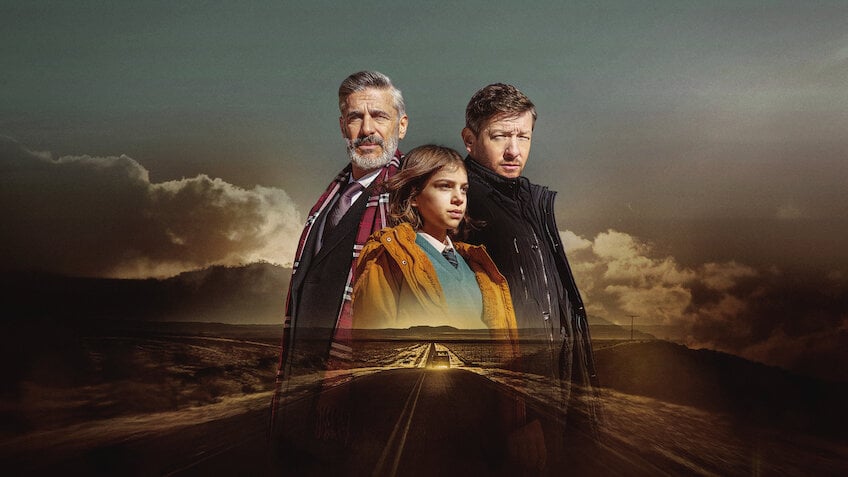

The global streaming landscape receives a significant new entry with the premiere of Maledictions (original title: Las Maldiciones), an Argentine-produced limited series. Structured as a political thriller with deep psychological underpinnings, the narrative is set in motion by a high-stakes crisis: the daughter of a provincial governor is abducted at a career-defining moment. This act of violence is made more complex by its timing, coinciding with a crucial legislative vote on the exploitation of lithium reserves, and by the identity of the perpetrator—the governor’s most trusted right-hand man. The series immediately establishes a framework where personal betrayal and political intrigue are inseparable, using an intimate family catastrophe as a lens through which to examine the broader corrupting influences of power. The choice of lithium as the political fulcrum is a pointedly contemporary one; the resource, essential for the global transition to green energy, grounds the drama in tangible geopolitical and economic realities, elevating the central conflict beyond a simple plot device into a commentary on resource control and national sovereignty. Created by the esteemed Argentine filmmaker Daniel Burman, the series positions itself as a taut exploration of ambition, loyalty, and the secrets that bind and ultimately destroy powerful families.
Narrative Architecture and Thematic Concerns
Constructed as a compact, three-episode miniseries, Maledictions employs a narrative economy that prioritizes thematic density and psychological depth over expansive plotting. This condensed format necessitates a focused, high-tension story where each development is critical to the central mystery. The core of this mystery is not the kidnapping itself, but the motives behind it, which are revealed to be rooted in a conspiracy concealed for thirteen years. This temporal framework is fundamental to the series’ thematic ambitions, suggesting that the present crisis is an inevitable reckoning for past transgressions. The narrative operates as a “slow burn” thriller, meticulously peeling back layers of history to expose the origins of the titular “curses.” These are not supernatural afflictions but rather the inherited burdens of family secrets and the toxic legacies passed between generations—what the series terms “the curses of filiation.” The governor, portrayed by Leonardo Sbaraglia, is thus caught in a crucible, forced to navigate a conflict where his political future is pitted against his daughter’s life. His dilemma transcends a simple choice between public duty and private affection; it becomes a confrontation with a history he helped create, where the lines between ally and enemy have dissolved. The series dissects the very nature of power, questioning its limits and exposing the moral compromises required to attain and maintain it, all within a tightly wound narrative that links every action to a long-dormant, and now violently awakened, past.


Literary Provenance and the Art of Adaptation
The series draws its narrative and thematic weight from a significant work of contemporary Argentine literature, being an adaptation of the 2017 novel Las Maldiciones by Claudia Piñeiro. Piñeiro is one of Argentina’s most celebrated and internationally translated authors, a writer whose work consistently merges the conventions of genre fiction—particularly crime and noir—with incisive social and political critique. Her involvement provides the series with a solid foundation of literary prestige and intellectual rigor. Piñeiro’s novels frequently dissect the hypocrisies and moral failings of the Argentine upper and political classes, exploring themes of corruption, systemic injustice, and feminist concerns through the accessible framework of a thriller. Her previous successful collaboration with Netflix on the series El Reino (The Kingdom), which examined the intersection of evangelical religion and political ambition, established a precedent for adapting her complex, socially relevant narratives for a global audience.
A key decision in the adaptation of Malediciones is a shift in narrative perspective. The source novel centers on the character of Román Sabaté, a young political aide who serves as an entry point into the world of his charismatic and ethically compromised boss, Fernando Rovira. This provides an outsider’s view of the corrupting mechanisms of power. The series, in contrast, places the governor himself at the center of the story, focusing the drama on the internal conflict of the man who wields power. This structural alteration leverages the considerable screen presence of lead actor Leonardo Sbaraglia and intensifies the narrative’s central themes by forcing the audience to inhabit the moral crisis of the decision-maker, making the exploration of choice, consequence, and betrayal a more direct and visceral experience.
Auteurial Vision and Generic Hybridity
The creative direction of Maledictions is helmed by Daniel Burman, a central figure in the cinematic movement known as the “New Argentine Cinema” that emerged in the late 1990s. Burman’s filmography, which includes internationally acclaimed works like El Abrazo Partido (Lost Embrace) and Derecho de Familia (Family Law), is distinguished by its focus on intimate character studies, often exploring themes of identity and family within the Jewish community of Buenos Aires. His involvement signals a commitment to nuanced psychological portraiture. He shares directorial duties with Martín Hodara, a filmmaker with established credentials in the thriller genre. Hodara previously directed Leonardo Sbaraglia in the tense drama Nieve Negra (Black Snow), establishing a creative shorthand with the series’ lead. This directorial pairing represents a synthesis of artistic sensibilities: Burman’s capacity for intimate, character-driven drama is fused with Hodara’s experience in building suspense and navigating the mechanics of the thriller genre.
This synthesis is further reflected in the series’ ambitious generic hybridity. The production explicitly blends the political thriller with the aesthetic and thematic language of the western. This choice is anchored by the series’ setting, with filming taking place in the arid, expansive landscapes of northern Argentina. The cinematography utilizes this geography to evoke the iconography of the classic western—a vast, morally ambiguous frontier where law is fragile and survival depends on ruthless calculation. By transposing a contemporary story of political corruption and resource conflict onto this mythic landscape, the series constructs a powerful modern allegory. The struggle over lithium mining becomes a modern-day land grab, and the political arena is reimagined as a lawless territory where foundational myths are forged through violence and betrayal.
Cinematic Craft and Production Framework
The series’ high artistic ambitions are evident in its assembly of a top-tier technical crew. The cinematography is managed by the decorated duo of Rodrigo Pulpeiro and Javier Juliá. Pulpeiro’s extensive credits include acclaimed films such as La odisea de los giles (Heroic Losers). Juliá’s involvement is particularly notable, as he served as the director of photography on two of the most internationally successful Argentine films of the past decade: the Oscar-nominated anthology Relatos Salvajes (Wild Tales) and the historical drama Argentina, 1985. His participation connects Maledictions to a lineage of Argentine productions recognized for their world-class visual craft and narrative sophistication, promising a cinematic language that is both polished and dramatically potent.
The score, composed by Hernán Segret and Nico Cota, provides the auditory texture for the unfolding psychological drama. The editing, by Eliane D. Katz and Andrea Kleinman, is crucial in maintaining the tension required by the three-part structure. Art direction by Mariela Rípodas is responsible for creating the visual world that supports the series’ generic blend of modern political thriller and classic western. The production itself is a collaboration between Daniel Burman’s company, Oficina Burman, and Cimarrón Cine, both operating under the umbrella of the major Spanish media conglomerate The Mediapro Studio. This structure exemplifies a prevailing model in contemporary global television, where a distinctly local story, conceived by an Argentine auteur and adapted from a major national author, is realized with the financial backing and production infrastructure of a major international entity, ensuring its aesthetic quality and reach for a global market.
Ensemble and Character Dynamics
At the heart of the political and familial drama is a formidable ensemble of Argentine actors. The series is led by Leonardo Sbaraglia as the embattled governor Fernando Rovira. Sbaraglia is an actor of international stature, with a career that spans both Argentine cinema and major productions in Spain and Hollywood, including roles in Relatos Salvajes and Pedro Almodóvar’s Dolor y gloria (Pain and Glory). His presence provides the series with a charismatic and complex center. He is supported by a cast of accomplished performers, including Gustavo Bassani, who plays the trusted aide turned kidnapper, and Mónica Antonópulos. Alejandra Flechner, a veteran of Argentine stage and screen, also holds a key role. The critical part of the kidnapped daughter, Zoe, is performed by Francesca Varela. The wider cast is populated by a roster of respected character actors, including Osmar Núñez, César Bordón, Nazareno Casero, and María Ucedo. The decision to assemble such a deep bench of talent underscores the series’ focus on performance-driven drama. It is not merely a star vehicle but a true ensemble piece, where the intricate web of political conspiracy and personal history is brought to life through the complex interactions of its many well-drawn characters.
Maledictions presents itself as a meticulously crafted work, synthesizing the narrative complexity of a literary adaptation with the taut suspense of a political thriller and the allegorical power of a modern western. It stands as an ambitious project within the Argentine audiovisual landscape, leveraging the country’s formidable creative talent—from its literary figures and auteur directors to its world-class cinematographers and veteran actors—to produce a dense, psychologically rich drama for a global platform. The three-part miniseries Maledictions is available for global streaming on Netflix from September 12, 2025.