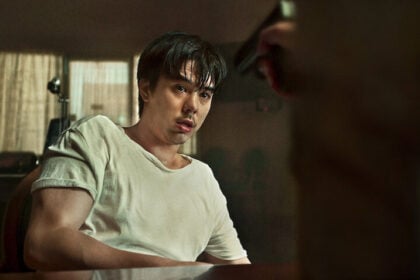


The premiere of The Dead Girls (Las Muertas) marks a significant event in contemporary television, representing the confluence of a canonical work of Latin American literature, the cinematic vision of one of Mexico’s most prominent filmmakers, and a notorious chapter from the nation’s criminal history. The six-episode limited series is the first television project from director Luis Estrada, a filmmaker whose career has been defined by acclaimed features that employ sharp satire to dissect Mexican political and social life. This production is an adaptation of the 1977 novel of the same name by Jorge Ibargüengoitia, a towering figure in 20th-century Mexican letters. The narrative itself is a fictionalized exploration of the real-life case of the González Valenzuela sisters, who became infamous in the 1960s as the serial killers known as “Las Poquianchis”. The deliberate combination of these three pillars—a revered auteur, a prestigious literary source, and a shocking true story—positions the series not as a conventional crime drama, but as a piece of prestige television engineered for serious cultural engagement. It signals an intent to leverage established artistic and historical reputations to establish the show’s intellectual credentials for a discerning global audience.
Literary Origins and Historical Trauma
The foundation of the series is twofold, resting upon both Jorge Ibargüengoitia’s celebrated novel and the grim historical reality that inspired it. The 1977 novel Las Muertas is considered a cornerstone of modern Mexican literature, a work that took the sordid facts of a true-crime story and transmuted them into a profound piece of social commentary. The book is a fictionalized account of the González Valenzuela sisters—renamed the Baladro sisters in the novel and the series—who operated a network of brothels in the state of Guanajuato during the 1960s and were ultimately convicted of numerous crimes, including the murders of their employees and their newborn children. Ibargüengoitia’s literary genius lay in his approach to this material. Rather than a straightforward dramatization, his novel is characterized by a distinctive blend of dark humor, biting satire, and an unflinching critique of the societal fabric of post-revolutionary Mexico, exposing the institutional ineptitude and systemic corruption that allowed such atrocities to occur. The novel’s narrative structure is unconventional, eschewing a linear plot in favor of a fragmented, multi-perspective reconstruction of events that resembles a journalistic report or a collection of disparate court testimonies. This stylistic choice is central to its thematic power, creating an objective, almost clinical distance that paradoxically amplifies the horror and absurdity of the events. The series adopts this satirical and quasi-journalistic tone, a decision that functions as more than a mere stylistic homage. It serves as a sophisticated narrative mechanism for confronting a national trauma too grotesque for direct, realist depiction. The use of satire provides a critical distance, allowing the story to move beyond the sensationalist details of the crimes themselves to conduct a more incisive examination of the cultural and political conditions—the pervasive misogyny, moral duplicity, and institutional decay—that created the environment in which such evil could flourish.
Mais artigos


The Auteur’s Vision and Narrative Architecture
The creative force behind The Dead Girls is unequivocally Luis Estrada, who serves as the series’ creator, showrunner, co-screenwriter, and the director of all six episodes, affording him a degree of comprehensive auteurist control rare in television production. His connection to the material is not recent; Estrada has described his desire to adapt Ibargüengoitia’s novel as a 30-year “obsession,” one that began when he first read the book at the age of 15. For decades, the project was envisioned as a feature film, but its realization was ultimately contingent on a shift in the media landscape. Estrada found that the long-form, episodic structure of a limited series, as offered by a global streaming platform, was the “ideal format” for the novel’s expansive canvas of characters, locations, and interwoven timelines—a narrative complexity that could never be adequately contained within the runtime of a conventional film. This makes the series a prime example of how the streaming model is fundamentally altering the possibilities of literary adaptation, providing the creative and financial latitude to translate complex novels with a fidelity previously unattainable. The screenplay, co-written with his frequent collaborator Jaime Sampietro and with contributions from Rodrigo Santos, was developed with a deep reverence for the source material’s unique structure. Estrada’s directorial approach was to shoot the entire series as a single, cohesive production, akin to an extended film, with each episode meticulously crafted as if it were a short feature, even suggesting that each installment functions as an “independent movie with its own genre”. A key creative decision was to preserve the novel’s quasi-journalistic, multi-vocal narrative, intertwining testimonies and official statements as a pivotal cinematic device to reconstruct the story. However, the adaptation is not without a significant authorial intervention. The sixth and final episode features an entirely new script penned by Estrada and Sampietro, a deliberate choice made to address what they perceived as the novel’s “abrupt” ending and to provide a more cinematically and thematically conclusive resolution.
A Cast of Mexican Prestige
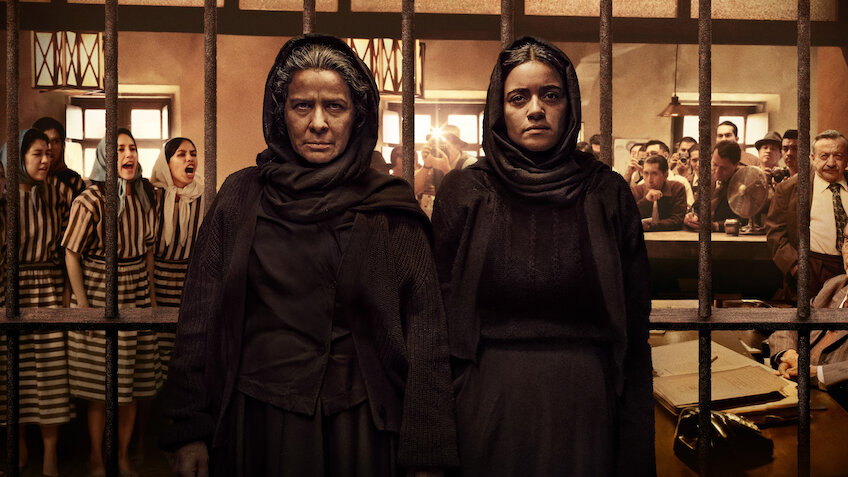
The series features an ensemble of actors who represent a high caliber of talent within both Mexican and international cinema. The narrative is anchored by the performances of Arcelia Ramírez as the elder sister, Arcángela Baladro, and Paulina Gaitán as the younger sibling, Serafina Baladro. Both actresses bring considerable dramatic weight to their roles. They are supported by a prominent cast of established performers, including Joaquín Cosío as Captain Bedoya, the officer investigating the case, and Alfonso Herrera as Simón Corona, a key figure in the sisters’ enterprise. The wider ensemble is populated by respected actors such as Mauricio Isaac, Leticia Huijara, Enrique Arreola, and Fernando Bonilla, creating a rich tapestry of characters. The casting strategy brings together performers with significant global recognition from their work in high-profile international productions such as Narcos, Ozark, and Sense8, alongside actors celebrated for their contributions to acclaimed Mexican films, including Estrada’s own La Ley de Herodes. This assemblage of talent underscores the production’s ambition and its positioning as a premium dramatic work.
The Craft of a Hand-Built World
The production of The Dead Girls was an immense and meticulous undertaking, distinguished by its scale and a profound commitment to practical, tangible craftsmanship. Filming spanned 21 weeks and involved a principal cast of 150 actors supported by more than 5,000 extras, reflecting the ambition to create a populated and authentic world. The most remarkable aspect of the production is its dedication to physical world-building. A total of 220 distinct sets were constructed to recreate the various environments of 1960s Mexico, with the production deliberately eschewing digital enhancements and visual effects. Estrada has noted that every frame of the series was “handcrafted,” a philosophy that extends from the production design to the costumes and props. This commitment to practical effects and physical sets is not merely an aesthetic choice but a thematic one. By physically constructing the world of the Baladro sisters, the production grounds its narrative of corruption and violence in a tactile, undeniable reality. This material authenticity reinforces the series’ quasi-documentary style, underscoring the assertion that these horrific events transpired in a real time and place, not a stylized digital reconstruction. The extensive location filming further enhanced this authenticity, with shooting taking place across the Mexican states of San Luis Potosí, Guanajuato, and Veracruz, as well as on soundstages at Mexico City’s historic Churubusco Studios. The key creative team responsible for this visual language includes Director of Photography Alberto Anaya Adalid “Mándaro,” Production Designer Salvador Parra, and Editor Mariana Rodríguez. The series is produced by Estrada and Sandra Solares through their production companies Mezcala Films, Bandidos Films, and Jaibol Films.
A Dissection of Systemic Malice
While the narrative engine of The Dead Girls is a true-crime story, its thematic concerns are those of a complex social critique. The central plot follows the sisters Arcángela and Serafina Baladro as they methodically build a lucrative and brutal empire of brothels, a criminal enterprise that ultimately unravels and exposes them as two of Mexico’s most notorious serial killers. However, the series argues that their actions were not an isolated anomaly but rather a symptom of a larger societal sickness. The narrative is a deep exploration of systemic failure, examining how unchecked power, institutional corruption, pervasive misogyny, and profound moral duplicity created the conditions that allowed the sisters to operate their network of exploitation and murder with impunity for years. A central theme, inherited directly from Ibargüengoitia’s novel, is the concept of “malice,” a study of the banality of evil that explores how ordinary people, including the victims of the system, can themselves become perpetrators when given the opportunity. In this way, the criminal enterprise of the Baladro sisters functions as a powerful microcosm of a corrupt state. The power dynamics, moral compromises, exploitation, and systemic violence that define the internal world of the brothels serve as a direct metaphor for the larger societal ills that Estrada has critiqued throughout his filmography. The series uses this contained, brutal environment to stage a broader allegory about national moral decay, where the sisters’ reign of terror is a reflection of the state’s own moral bankruptcy. The series thus continues Estrada’s career-long project of using satire and black humor to dissect Mexican political and social structures, offering a uniquely Mexican perspective on universal themes of gender, power, and violence.
Reconstructing a Legend for a Global Audience
The Dead Girls arrives as a complex, multi-layered work that functions simultaneously as a faithful literary adaptation, a chilling historical reconstruction, and a potent auteurist statement. It represents a significant addition to the growing catalog of ambitious international dramas, distinguished by its literary pedigree, its unflinching subject matter, and the singular vision of its director. By synthesizing the narrative grit of the true-crime genre with a sophisticated, satirical, and deeply critical approach, the series aims to be both a narratively sharp thriller and a piece of resonant social commentary. In bringing one of Mexico’s darkest legends to a global platform through the lens of one of its most critical and uncompromising filmmakers, the series engages in a complex act of cultural translation, historical examination, and artistic synthesis.
The six-episode limited series The Dead Girls (Las Muertas) premiered worldwide on the Netflix streaming platform on September 10, 2025.