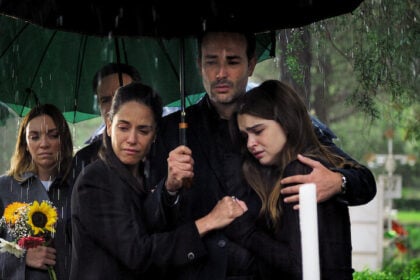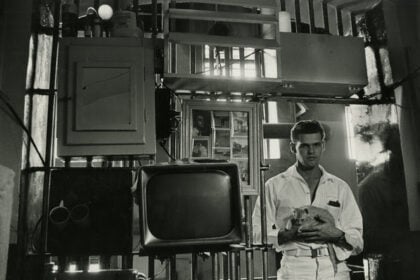



The new film Kontrabida Academy operates not merely as a comedy, but as a self-reflexive, meta-cinematic exploration of narrative itself. Its central premise is initiated when Gigi, a restaurant worker portrayed by Barbie Forteza, finds her life unraveling. She faces systemic disrespect in her professional, familial, and romantic spheres, a state of collapse that renders her a perpetual victim. The film executes a fantastical turn when Gigi is physically transported through her television screen into a clandestine training institution for on-screen villains. This narrative device establishes the film’s core conceit: a literal journey into the machinery of storytelling, where the tropes of villainy are not just dramatic functions but a learnable, empowering craft.
The film operates as a hybrid of comedy-drama and revenge fantasy, employing the structural framework of the Japanese isekai genre, in which a protagonist is translocated to an alternate reality. The significance of this generic choice is profound; the “different world” Gigi enters is not a conventional fantasy realm, but the diegetic universe of the Filipino soap opera, or teleserye. It is a world governed by established character archetypes and narrative conventions, making the film’s setting a laboratory for cultural dissection. The academy, under the stewardship of the formidable Mauricia, played by Eugene Domingo, has a clear mission: to teach its students “how to be bad, how to be bongga, and how to be brave.” This curriculum is explicitly framed as a methodology for empowerment, a means for Gigi to cultivate confidence and exact retribution upon her real-world tormentors. The film’s central thesis thus emerges: the strategic adoption of the villainous persona is a viable, even necessary, path to self-actualization in a world that preys on the passive.
The Martinez Method: Satire as a Cinematic Scalpel



Kontrabida Academy is an indelible entry in the oeuvre of writer-director Chris Martinez, a Palanca award-winning playwright whose cinematic work is characterized by a synthesis of popular appeal and intellectual rigor. The film functions as a spiritual successor to his previous screenplays, most notably Ang Babae sa Septic Tank. In that film, which centered on filmmakers attempting to create an Oscar-worthy drama about a mother who sells her child to a pedophile, Martinez deconstructed the tropes of “poverty porn” and the pretensions of the independent film circuit. Here, he turns his satirical lens from the arthouse to the mainstream, dissecting the archetypes of the commercial teleserye, specifically its most enduring figure: the kontrabida. This thematic continuity reveals a career-long project of holding a mirror to the Philippine film industry itself, using genre conventions to interrogate the cultural values they reflect.
Martinez’s comedic philosophy, articulated in his view that “the best comedies are those that make you laugh so hard, but they actually hurt,” is fully realized in this film. Humor is not an end in itself but a vehicle for social commentary, a scalpel used to expose painful truths about power dynamics, societal expectations, and the construction of identity. His proficiency with ensemble comedies, demonstrated in films like Here Comes the Bride, is evident in the academy setting, where multiple character arcs are managed within a cohesive and witty narrative. His stated admiration for the work of Woody Allen signals an affinity for dialogue-driven comedy that explores societal absurdities. Ultimately, Kontrabida Academy is an ambitious project that seeks to elevate the local comedy genre, offering audiences something “big, bold and different” that is both intellectually stimulating and broadly entertaining.
A Masterclass in Malevolence: The Domingo-Forteza Dynamic
The film is anchored by the potent dynamic between its two leads. Eugene Domingo’s portrayal of Mauricia is a masterclass in archetypal mentorship. Her performance is informed by a celebrated career that has earned her the title “Comedy Star for All Seasons.” Her filmography, which includes her breakout dual lead role in the Martinez-penned Kimmy Dora series and her internationally lauded turn in Ang Babae sa Septic Tank, showcases a performer who navigates both broad comedy and nuanced drama with exceptional skill. A graduate of the esteemed Dulaang UP theater company, Domingo brings a commanding presence to the role, making her a credible and formidable headmistress for an academy of antagonists.
Barbie Forteza’s casting as Gigi is a deliberate subversion of her established star persona. As the “Kapuso Primetime Princess,” she is primarily known for portraying the bida, or heroine, in popular dramas such as The Half Sisters and Anak ni Waray vs. Anak ni Biday. Her extensive and versatile career, which includes an international Best Actress award for the film Laut and a defining role in the series Maria Clara at Ibarra, demonstrates a significant dramatic range. Her character’s arc in the film—from a downtrodden protagonist to an empowered antagonist—mirrors a meta-narrative of an actress known for playing heroes learning to wield the power of the villain. This is further deepened by Forteza’s real-world artistic development, which includes participation in an acting masterclass with the late Cherie Gil, one of Philippine cinema’s most iconic kontrabidas. The casting, therefore, creates a compelling mentor-protégé relationship that also functions as a dialogue between cinematic generations. Domingo, the veteran comedic force and frequent Martinez collaborator, schools Forteza, the standard-bearer for the current generation of primetime drama. It is a symbolic exchange between two distinct but related traditions in Philippine entertainment: the sharp, satirical comedy film and the emotionally resonant serialized drama.
The Cultural Currency of the Kontrabida
The film engages in a sophisticated cultural analysis of the kontrabida archetype, a foundational element of Filipino popular media. Traditionally, this figure is a wealthy, scheming, and powerful matriarch who serves as the primary obstacle to the heroine’s happiness. This character’s significance extends beyond mere plot mechanics; she is a potent cultural symbol. The kontrabida represents a transgression against the idealized Filipina identity, which is often portrayed as “pure, submissive, and naive.” Her ambition, assertiveness, and exercise of power are coded as villainous traits, and her narrative arc conventionally concludes with punishment, thereby reinforcing conservative social norms.
Kontrabida Academy fundamentally subverts this function. The kontrabida is transformed from a cautionary tale into a role model. The film posits that in a world that exploits the passive bida, adopting the kontrabida’s agency is a rational, even essential, act of survival. The academy’s curriculum, which includes lessons in delivering sharp-tongued monologues and executing dramatic slaps, is presented as a practical toolkit for navigating a hostile environment. The film suggests that the antagonist is not born but made, a “direct product of the world they tried very hard to survive in.” This reframing is an act of feminist reappropriation. It takes a character trope historically used to police female ambition and recasts it as a source of liberation. The film argues that the “villainy” of the kontrabida is not inherent evil, but rather the possession of agency and a refusal to suffer silently—qualities coded as antagonistic only within a patriarchal narrative structure. The academy is the space where this coding is deconstructed and its components reclaimed as strength.
An Ensemble of Archetypes and the Final Assessment
The academy is populated by a strong ensemble cast, including Jameson Blake, Michael De Mesa, Ysabel Ortega, Xyriel Manabat, Carmina Villaroel, Yasser Marta, and Pinky Amador. Their roles function as representations of various sub-archetypes of on-screen villainy, enriching the film’s self-referential universe. A poignant homage to the lineage of this archetype is the visible placement of a photograph of the late Cherie Gil within the academy’s halls, cementing the film’s deep awareness of its own cinematic history.
In its totality, Kontrabida Academy is a complex and rich story that utilizes a comedic premise to investigate the weight of power and the repercussions of human decisions. Its achievement lies in its capacity to operate simultaneously as a highly entertaining comedy and an intelligent piece of media criticism. It is a significant work in contemporary Filipino cinema, distinguished by a witty screenplay, sharp direction, and the formidable chemistry of its lead actresses. The film rewards viewers familiar with the tropes of Filipino media while remaining accessible through its universal narrative of empowerment. The film has a runtime of 107 minutes. Produced by Unitel Straight Shooters Media, Kontrabida Academy premiered globally on Netflix on September 11, 2025.