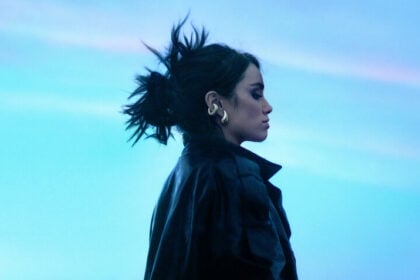



Netflix’s latest Korean original film, Love Untangled, arrives as a noteworthy entry in the romantic comedy genre, leveraging a meticulously recreated 1998 setting to explore the enduring anxieties of youth. Titled 고백의 역사 (Gobaegui yeoksa, literally “History of Confession”) in its native Korean, the film’s central conceit is deceptively simple: in the coastal city of Busan, nineteen-year-old Park Se-ri becomes convinced that her lifelong complex—a head of severely curly hair—is the primary obstacle to a successful love confession. This premise, however, serves as a conduit for a more profound narrative, a potential hinted at by its production pedigree. The film is produced by Bombaram Film, the studio behind the socially resonant Kim Ji-young: Born 1982, suggesting an inclination toward stories with substantive cultural commentary. Helming the 119-minute feature is Namkoong Sun, a director whose career has been forged in the crucible of the independent film circuit. Her previous works, including the critically acclaimed Ten Months and Time to Be Strong, are distinguished by their sober and nuanced examinations of formidable themes such as patriarchal pressures, career interruptions due to pregnancy, and the psychological trauma afflicting former K-pop idols. Her transition to a seemingly effervescent “high-teen” romance is not a dilution of her authorial voice but a strategic transposition. The film utilizes the accessible, popular format of a nostalgic romantic comedy as a vehicle for the director’s recurring thematic interests in self-acceptance and societal pressure, packaging a critical indie sensibility for a global mainstream audience.
The Narrative Weave: Confessions, Complications, and Curls
Scripted by Ji Chun-hee and Wang Doo-ri, the film’s narrative architecture is driven by Park Se-ri’s singular mission: to confess her feelings to Kim Hyeon, the school’s most popular boy. This objective is predicated on her belief that she must first tame her perpetually frizzy hair, a feature she considers a fatal flaw. The catalyst for action and complication arrives in the form of Han Yoon-seok, a transfer student from Seoul whose initial cynicism belies a hidden past. Se-ri’s plans crystallize into “Operation Love,” a scheme concocted with her friends Baek Seong-rae and Go In-jeong to engineer the perfect confession. Yoon-seok is drawn into this endeavor, not least because his mother runs a beauty salon purported to have the only cutting-edge hair-straightening treatments in Busan. As the group executes their plan, the narrative unfolds through a series of comedic and often clumsy set pieces. Yet, beneath the surface of this mission, an authentic, subtle chemistry begins to form between Se-ri and Yoon-seok, constructing an intriguing love triangle. The film deliberately employs this “operation” framework, a common trope in teen comedies, to deconstruct the ritualistic nature of adolescent courtship. The act of confession is treated not as a spontaneous overflow of emotion but as a quasi-military campaign, meticulously planned and fraught with perceived high stakes. Se-ri, described as being experienced in failed confessions, approaches this latest attempt with tactical precision, reflecting the immense social pressure that transforms vulnerability into a strategic challenge. When asked what she will do if the confession fails, Se-ri offers a surprisingly mature perspective: “The time we spent together will still remain, won’t it?”. This sentiment reveals the film’s deeper focus on the process of connection over the outcome of the romance.


Character Portrayals and Performances
The film is anchored by a trio of central performances that play with and subvert audience expectations. As Park Se-ri, Shin Eun-soo delivers a performance of remarkable vivacity, a notable departure from the more restrained and melancholic characters she has portrayed in works like Summer Strike and Twinkling Watermelon. She embodies Se-ri’s “pure positive energy,” a quality Shin has stated is close to her own personality when among friends. Director Namkoong Sun lauded the actress for her ability to express emotion with her entire body and for her meticulous preparation, which included working with a dialect coach multiple times a week and getting help from her Busan-native co-stars to master the regional accent. Gong Myung, known for versatile roles in the box-office hit Extreme Job and the fantasy drama Lovers of the Red Sky, portrays Han Yoon-seok. He charts the character’s evolution from a cynical outsider to a gentle and emotional confidant, a performance he described as his “most youthful portrayal” to date. Gong’s established persona of boyish warmth provides a stable emotional core for the film, against which the other characters’ complexities are contrasted. Playing the idealized object of affection, Kim Hyeon, is Cha Woo-min. An actor who has built a formidable screen presence through intense, antagonistic roles in Weak Hero Class 1 and Night Has Come, his casting here is a deliberate counterpoint to his established type. This choice imbues the seemingly one-dimensional “school heartthrob” with an underlying tension, adding an enigmatic air to the character and questioning the placid surface of high-school hierarchies. The supporting ensemble, including Yoon Sang-hyeon as the loyal friend Baek Seong-rae and Kang Mi-na as Go In-jeong, provides crucial comedic and emotional texture. Further reinforcing the film’s thematic lineage is a reported cameo by Gong Yoo and Jung Yu-mi, the stars of producer Bombaram Film’s seminal Kim Ji-young: Born 1982.
Directorial Vision and Thematic Depth
In Love Untangled, Namkoong Sun skillfully infuses a mainstream genre with the thematic gravity characteristic of her independent work. The film’s central metaphor is Se-ri’s hair, which the director identifies as the “backbone of the film’s plot and its central message”. The perpetually frizzy, uncontrollable curls serve as a potent symbol for the aspects of self that defy societal norms, embodying the adolescent struggle with insecurity and the painful desire for acceptance. The narrative arc is thus less about a romantic conquest and more about an internal journey toward self-love, posing the critical question of whether one truly needs to change to be worthy of affection. This theme of overcoming shame to find self-worth resonates with other successful contemporary Korean productions. Namkoong Sun applies her “uniquely tender perspective” to the small, relatable moments of teenage life, validating the emotional weight of what might otherwise be dismissed as frivolous concerns. Her direction employs a form of empathetic realism within a stylized, nostalgic framework, refusing to treat the sincerity of teenage confession lightly and instead exploring its emotional weight. The 1998 setting is not merely an aesthetic choice but a carefully constructed narrative vessel. By removing the contemporary pressures of social media and digital surveillance, the film creates a safe, allegorical space to explore the timeless and universal anxieties of adolescence with sincerity.
The Aesthetics of 1998: A Study in Cultural Nostalgia
The film’s production design and cinematography work in concert to resurrect the specific cultural milieu of Busan in 1998. The visual world is populated with period-specific artifacts that evoke a powerful sense of “vintage charm”: cassette tapes, bulky camcorders, 35mm film cameras, pagers, and popular comic books of the era. The costuming, from retro hairstyles to the oversized school uniforms, further grounds the film in its chosen time. This aesthetic choice is deeply connected to the director’s thematic intent. Namkoong Sun, a high school student herself during this period, selected 1998 to capture what she describes as the era’s “strange cultural optimism,” a time when the first generation of K-pop idol groups was emerging and a sense of new possibilities felt palpable for young people. However, this representation constitutes a form of curated, “reflective nostalgia”. The film’s focus on cultural vibrancy conspicuously omits the profound national trauma of the IMF Financial Crisis, which reached its zenith in 1998. This is not a historical oversight but a deliberate artistic choice. Rather than attempting a complete historical reconstruction, the film engages in a nostalgia that “dwells in longing” for a particular feeling of the past. It remembers the past not as it was in its entirety, but as an “imagined” space to explore the resilience and optimism of its youth culture as an emotional antidote to the shadows of both that era and the present.
An Evolution of the Genre
Ultimately, Love Untangled succeeds in its ambitious synthesis of directorial depth and genre accessibility. The film uses its nostalgic setting and romantic comedy structure to deliver a poignant and enduring message about the complexities of self-worth. Se-ri’s journey to untangle her hair is inextricably linked to her journey to untangle her own insecurities, a process facilitated by the charming and emotionally resonant performances of its cast. While some may find the narrative’s plausibility loosens in its final act, the film’s heart lies not in grand romantic gestures but in the quiet, terrifying, and ultimately liberating act of a heartfelt confession. In an age of digital immediacy, this focus on an analog vulnerability feels both nostalgic and radical. The film stands as a mature evolution of the South Korean rom-com, a genre that, since the 1990s, has increasingly moved away from traditional melodrama to explore more complex, character-driven stories. It is a quiet but powerful celebration of the courage it takes to be vulnerable and the profound peace that comes from accepting oneself, curls and all.
The film was released globally and exclusively on Netflix on August 29, 2025.