

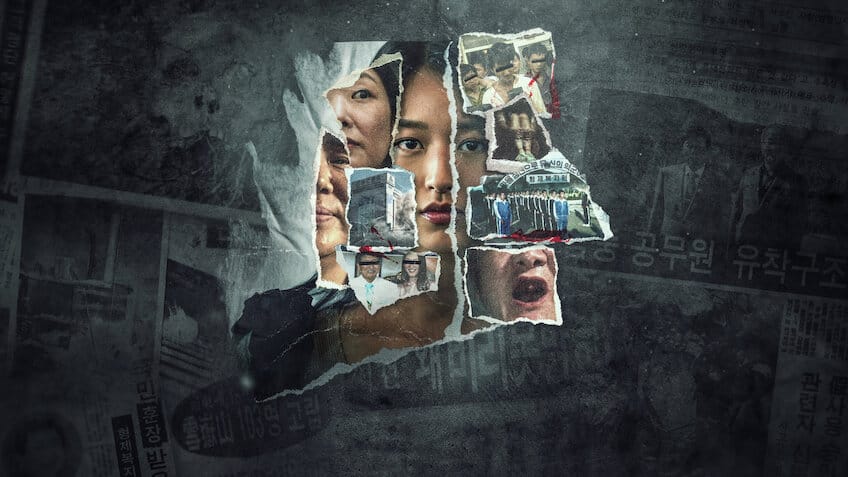

A new documentary series released globally today on Netflix offers a sobering examination of four foundational tragedies that have shaped the modern South Korean psyche. The eight-part series, The Echoes of Survivors: Inside Korea’s Tragedies, produced by the Korean broadcaster MBC, moves beyond sanitized historical accounts to confront the painful and often suppressed truths behind events that have left indelible scars on the nation’s collective memory. The series operates from a clear and challenging premise: some stories are too painful to relive, yet far too important to forget.
The project is helmed by director Jo Seong-hyeon, whose previous work, the acclaimed 2023 docuseries In the Name of God: A Holy Betrayal, established his reputation for unflinching investigative storytelling. This new series functions as a thematic successor, with Jo and his creative team returning to expand their inquiry from the specific pathology of religious exploitation to a wider spectrum of societal trauma. The methodological approach remains consistent: a “survivor-centered lens” that prioritizes personal testimony over abstract analysis. Through a meticulous combination of intimate interviews and rare archival footage, the series aims not only to recount the harrowing events but to explore the enduring resilience of those who lived through them, seeking to reframe public memory through the amplification of long-unheard voices.
The series arrives at a moment of broader socio-political reckoning in South Korea, where there is a renewed impetus to re-examine past disasters and hold institutions accountable, as evidenced by contemporary government actions concerning more recent tragedies. The four events chosen for this series are not disconnected incidents; they are emblematic of the distinct and often brutal growing pains of a nation undergoing one of the most rapid transformations in modern history. Each tragedy serves as a case study for a different facet of the dark side of the “Miracle on the Han River”: the insidious nature of religious exploitation thriving in a society of flux, the systematic violence of an authoritarian state obsessed with its international image, the nihilistic rage born from extreme economic inequality, and the catastrophic consequences of corporate greed abetted by state corruption. In this context, The Echoes of Survivors transcends the documentary format to become an act of cinematic truth and reconciliation, using a global platform to force a national conversation about the human cost of its own progress.


A Deeper Investigation into Faith and Exploitation
The series opens by revisiting familiar territory for its director, expanding the investigation into the Jesus Morning Star (JMS) cult that was a central focus of In the Name of God: A Holy Betrayal. This new examination brings forward new testimony and provides deeper context for the decades of alleged brainwashing and sexual misconduct orchestrated by its leader, Jeong Myeong-seok. The narrative profiles Jeong as a charismatic, self-proclaimed prophet who founded his Providence movement in the 1980s, successfully recruiting from the ranks of elite university students by embedding his organization within campus life through sports and social clubs.
The documentary chronicles the long and cyclical legal pursuit of Jeong. This includes his flight from South Korea in 1999 following a television exposé, a subsequent international manhunt culminating in an Interpol Red Notice, and his eventual extradition from China to face justice. His first conviction resulted in a 10-year prison sentence for the rape of multiple followers, a period of incarceration that ended with his release in 2018. The series then documents his recidivism, detailing his re-arrest and indictment in 2022 on new charges of sexually assaulting several followers, including foreign nationals from Australia and Hong Kong. The complex legal battle that followed is a key focus, tracing his initial 23-year sentence, its controversial reduction to 17 years on appeal, and the final confirmation of this sentence by the nation’s Supreme Court.
A crucial dimension of this investigation is the exposure of institutional failure and complicity. The series touches upon the alleged existence of the “Sasabu” faction, a group of JMS followers reportedly operating within the South Korean police force, who are accused of obstructing investigations into the cult’s activities. This narrative thread is reinforced by the recent suspension of a police captain for his role in hindering the probe into Jeong. The power and influence of the JMS organization are further illustrated by its aggressive legal tactics, including filing injunctions to block the broadcast of both this series and its predecessor, arguing that the programs violate the principle of presumption of innocence and constitute an attack on religious freedom.
The JMS case, as presented, transcends a purely domestic Korean context, revealing itself as a distinctly transnational phenomenon. The crimes for which Jeong was convicted were committed across Asia, in Malaysia, Hong Kong, and China, with victims from around the world. The cult itself maintains a global network, with operations reported in at least 70 countries, including active branches in Australia and Malaysia. The documentary series itself has become a critical agent in countering this global reach. The first series, In the Name of God, had a tangible international impact, prompting viewers in other countries to share information about local JMS chapters and empowering survivors outside of Korea. The release of this new series, with its fresh testimony, suggests a feedback loop in which media exposure emboldens more victims to come forward, creating a global, digitally connected community of survivors. The documentary thus acts as a powerful counter-force, piercing the veil of secrecy that allows such organizations to operate across borders and providing a platform for a collective, international testimony against them.
Uncovering State-Sanctioned Atrocity at the Brothers’ Home
The series dedicates a significant portion of its narrative to the horrific events that transpired at the Busan Brothers’ Home (Hyeongje Bokjiwon), an institution that has been referred to as a Korean concentration camp. Operating officially as a welfare facility for “vagrants” from the 1970s until its exposure in 1987, the Brothers’ Home was in reality a state-sanctioned internment camp. Thousands of people—including homeless individuals, people with disabilities, children, and even student protestors—were arbitrarily rounded up from the streets by police and facility staff, illegally confined, and subjected to a litany of human rights abuses.
Through harrowing survivor testimonies, the documentary reconstructs a regime of systematic violence. Inmates were forced into unpaid labor in the facility’s more than 20 factories, producing goods for export. They endured constant physical and sexual assault, torture, and starvation. The official death toll from the facility is now estimated to be at least 657, with death rates from disease and abuse far exceeding the national average. Medical records indicate the forced administration of antipsychotic drugs to maintain control, and evidence suggests that some of the children incarcerated at the home were sold into the international adoption market.
The series makes it clear that these atrocities were not the actions of a single rogue institution but were actively enabled and encouraged by state policy. The abuses were carried out under an official government directive issued in 1975 to “purify” the streets, a campaign that intensified in the lead-up to the 1986 Asian Games and the 1988 Seoul Olympics. Police and local officials were given incentives to round up as many “vagrants” as possible, and the Brothers’ Home received government subsidies based on the number of people it incarcerated. The state’s complicity ran deep; the military’s powerful Defense Security Command used the facility as a black site to intern and surveil individuals deemed politically “suspicious” under the draconian National Security Act.
The final part of this narrative arc details the decades-long struggle for justice. The facility was first exposed in 1987 by a prosecutor, Kim Yong-won, who accidentally discovered a forced labor gang. However, the subsequent investigation was suppressed, and the facility’s owner, Park In-geun, received only a light sentence for embezzlement while being acquitted of illegal confinement. The documentary chronicles the relentless activism of survivors, such as Han Jong-sun and Choi Seung-woo, whose fight eventually led to the passage of a Special Law in 2020. This law established a new Truth and Reconciliation Commission, which, in 2022, officially recognized the Brothers’ Home incident as a “serious violation of human rights” and an act of “state violence,” finally recommending an official state apology and support for victims.
The history of the Brothers’ Home is a chilling illustration of biopolitics, a mode of governance where the state exercises power over the very biological existence of its citizens. The official policy to “purify” the streets framed certain people not as citizens requiring aid, but as social contaminants to be removed from the body politic in the service of constructing a modern, orderly national image for an international audience. The lives of the inmates were systematically devalued and sacrificed for the sake of national branding ahead of the Olympics. This erasure of personhood is a recurring theme in survivor accounts: being assigned a number instead of a name, or having one’s identity completely replaced. In this context, the state’s actions reduced citizens to what the philosopher Giorgio Agamben termed “bare life”—life that can be taken without consequence. The Truth and Reconciliation Commission’s formal declaration of “state violence” is therefore profoundly significant. It is an official act that re-inscribes the victims back into the national narrative as citizens whose rights were violated by the very state meant to protect them. By amplifying their long-silenced voices, the documentary participates directly in this crucial act of historical and political restoration.
Class Hatred and a Spree of Violence: The Jijonpa Murders
The third tragedy explored by the series is the case of the Jijonpa, or “Supreme Gang,” a group whose brief but exceptionally violent crime spree in 1993 and 1994 sent shockwaves through the nation. The gang, founded by a former convict named Kim Gi-hwan, was composed of other ex-prisoners and unemployed workers who were united by a clear and brutal ideology: a deep-seated hatred of the wealthy. Their doctrine, as they articulated it, was simple: “We hate the rich”.
Their methods were as calculated as their motive was raw. The gang established a remote hideout complete with a custom-built incineration facility and prison cells in the basement, designed for the disposal of their victims. They amassed an arsenal of weapons, including firearms and dynamite, with the stated goal of extorting one billion won from their targets. Their victims were not chosen at random but were selected based on the conspicuous symbols of the era’s newfound wealth. Driving a luxury car like a Hyundai Grandeur or appearing on a mailing list for the exclusive Hyundai Department Store was enough to mark someone for abduction.
The series recounts the gang’s escalating brutality. Their crimes began with a “practice” murder of a young woman they deemed not wealthy enough to be a “real” victim, and included the execution of one of their own members for stealing funds. Their campaign of kidnapping and extortion culminated in the murder of a wealthy couple and a musician mistaken for a rich man. The cruelty of the Jijonpa was extreme, extending to acts of cannibalism—which one member confessed was an attempt to fully renounce his humanity—and forcing a captive to participate in the murder of another victim to ensure her silence. The gang’s reign of terror ended only when one of their captives, a woman named Lee Jeong-su, managed a daring escape and alerted the police. Upon their arrest, the members showed no remorse, with their leader stating that his only regret was not having killed more wealthy people. They were sentenced to death and executed, but the case was so infamous that it later inspired copycat crimes.
The Jijonpa murders cannot be understood as an isolated act of psychopathy; they were a grotesque and extreme symptom of the deep social anxieties and class antagonisms that festered beneath the gleaming surface of South Korea’s economic miracle. The early 1990s was a period of immense economic achievement, as the nation transformed into an industrial powerhouse. However, this rapid, state-led “growth-first” strategy also created vast wealth inequality, regional disparities, and what has been described as a form of “crony capitalism” that left many behind. The members of the Jijonpa were from the disenfranchised side of this economic transformation. Their violence was not merely criminal; it was ideological. By targeting the symbols of the new consumerist society—the luxury cars, the high-end department stores—they were waging a perverse and nihilistic class war against a system they felt had excluded them. The documentary’s decision to place this story alongside narratives of state and corporate failure is a deliberate curatorial choice. It makes the argument that the structural violence of extreme social and economic inequality can manifest in forms as destructive and terrifying as any institutional atrocity.
The Collapse of Trust: A Man-Made Disaster at Sampoong
The final case study in the series is the Sampoong Department Store collapse, a man-made disaster that has become a lasting symbol of systemic corruption and criminal negligence in modern South Korean history. The documentary reconstructs the events of a busy afternoon when the five-story luxury department store in Seoul suddenly pancaked into its own basement in less than twenty seconds. The collapse killed 502 people and injured 937, trapping nearly 1,500 shoppers and employees inside the rubble.
As the series meticulously details, the investigation revealed that the collapse was not an accident but the inevitable result of a cascade of deliberate, profit-driven failures. The building was originally designed as a four-story office building, but its owner, Lee Joon of the Sampoong Group, illegally added a fifth floor to house heavy restaurants with thick, heated concrete floors. The original construction company refused to make the dangerous modifications and was fired. To maximize retail space, crucial support columns were thinned and spaced too far apart, and large holes were cut into the building’s flat-slab structure to install escalators, critically compromising its integrity. The investigation also found that substandard concrete and thinner-than-required steel reinforcing rods had been used to cut costs. The final trigger came when three massive, multi-ton air conditioning units were dragged across the roof—instead of being lifted by a crane—to a new position, creating deep cracks in the already overloaded structure. Vibrations from these units on the day of the collapse caused a fatal punching shear failure, where the weakened columns punched through the concrete slabs above them.
Perhaps the most damning aspect of the tragedy, highlighted by the documentary, was the element of willful negligence. Store management was aware of the danger. Deep cracks had been appearing for months, and on the day of the collapse, loud bangs were heard from the upper floors as the structure began to fail. Despite these clear warning signs and the advice of engineers to evacuate, management refused to close the store, reportedly because they did not want to lose a day of high-revenue sales. The aftermath involved a heroic but chaotic rescue effort, with the last survivor, a 19-year-old clerk named Park Seung-hyun, miraculously pulled from the wreckage after 17 days. The store’s chairman, Lee Joon, and his son were eventually sentenced to prison for criminal negligence, along with several city officials who had accepted bribes to approve the illegal modifications. The disaster led to a massive public outcry, nationwide building inspections that found only one in fifty buildings to be safe, and the passage of a new Disaster Control Act.
The Sampoong Department Store collapse serves as a powerful and enduring metaphor for the failure of the social contract in a society that had come to prioritize profit and speed over human life. The physical collapse of the building was a direct reflection of the moral collapse of the institutions—corporate, governmental, and regulatory—that were entrusted with public safety. Each structural flaw represented a moment where a duty of care was exchanged for financial gain. The long-term psychological impact on the survivors and the nation stems not just from the horror of the event itself, but from this profound betrayal of trust. A recent survey of bereaved families found that a majority still suffer from what is described as “post-traumatic embitterment disorder,” a condition rooted in a deep sense of injustice and betrayal, fueled by the relatively light sentences given to those responsible. The disaster revealed a reactive pattern of governance, where safety policy is only addressed after a catastrophe, rather than being a proactive cultural value. The documentary’s focus on Sampoong is therefore an examination of a foundational cultural trauma, a moment when the promise of prosperity was revealed to be built on a dangerously weak foundation, both literally and figuratively.
The Documentary as Testimony: A Formal Analysis
The Echoes of Survivors adheres to a documentary philosophy that is consistent with director Jo Seong-hyeon’s previous work, prioritizing the personal and the intimate as a lens through which to critique larger social and political structures. His approach aligns with a significant trend in South Korean documentary filmmaking that, since the 1990s, has shifted its focus from broad labor movements to the stories of society’s most vulnerable individuals. The series is an exercise in cinematic truth-seeking, aiming to restore the dignity of victims by allowing them to control their own narratives.
The series employs a sophisticated blend of cinematic techniques common to the modern investigative documentary genre. The narrative is anchored by the extensive use of “rare archival footage,” which grounds the personal testimonies in objective historical fact. This material, likely including news reports, police videos, and personal media, provides an unvarnished look at the events as they unfolded. This archival foundation is interwoven with the series’ core element: the “intimate interviews” with survivors. The visual composition of these interviews is carefully considered, often employing direct-to-camera address that fosters a sense of confessional intimacy between the subject and the viewer. The lighting and set design appear calculated to create an environment of safety and reflection, allowing for moments of quiet contemplation as well as emotional expression. The series also appears to utilize dramatic reconstructions, a staple of the true-crime genre, to visualize key moments in the historical timeline where archival footage may not exist.
This approach necessitates a careful navigation of the ethical challenges inherent in depicting profound trauma. The filmmakers appear to have adopted a principle of restraint, similar to that used in other sensitive Korean documentaries like In the Absence, which chronicled the Sewol ferry disaster. The priority is given to the victims’ perspectives, allowing them to lead the narrative. Rather than exploiting pain for sensational effect, the series often opts for a more measured, even “drier” presentation, trusting the power of the facts and the quiet dignity of the survivors to convey the gravity of the events. There is a conscious effort to avoid emotional manipulation through gratuitous imagery, instead allowing silence and understated testimony to provoke a deeper, more lasting response from the audience.
The Echoes of Survivors represents a significant evolution in the form and function of the South Korean documentary. It moves beyond the historical dichotomy of state-sponsored propaganda on one hand and niche, activist-led films on the other. By leveraging the high production values and global distribution network of Netflix, the series packages a critical counter-history within the highly popular and accessible format of the investigative true-crime documentary. It uses the forensic authority of the genre—combining archival evidence, expert analysis, and witness testimony in a manner reminiscent of Open Source Intelligence (OSINT) investigations—to systematically dismantle official narratives and expose systemic failures. In doing so, it creates a powerful and enduring public record that challenges the ability of the state and corporations to control the memory of their own past, ensuring that these crucial stories are not only remembered but are understood in their full, damning context.
Conclusion: Reframing Public Memory
Across its eight episodes, The Echoes of Survivors: Inside Korea’s Tragedies synthesizes the narratives of four disparate events into a cohesive and devastating portrait of a nation in transition. The series draws a clear line connecting the vulnerability of the individual against the immense power of institutions—be they state, corporate, or religious. It is a profound meditation on the long-term psychological toll of injustice and a testament to the extraordinary resilience of survivors who have fought for decades, often in isolation, to have their truths heard and acknowledged. Collectively, these stories paint a complex picture of South Korea during a period of tumultuous change, where the immense pressures of rapid modernization and democratization created deep societal fissures whose consequences are still being reckoned with today. Ultimately, the series is a powerful affirmation of the act of bearing witness. By providing a global platform for these survivors, it transforms their private pain into a universal and urgent call for accountability, justice, and the creation of a more humane social contract.
The eight-part documentary series The Echoes of Survivors: Inside Korea’s Tragedies premieres globally on Netflix on August 15, 2025.