

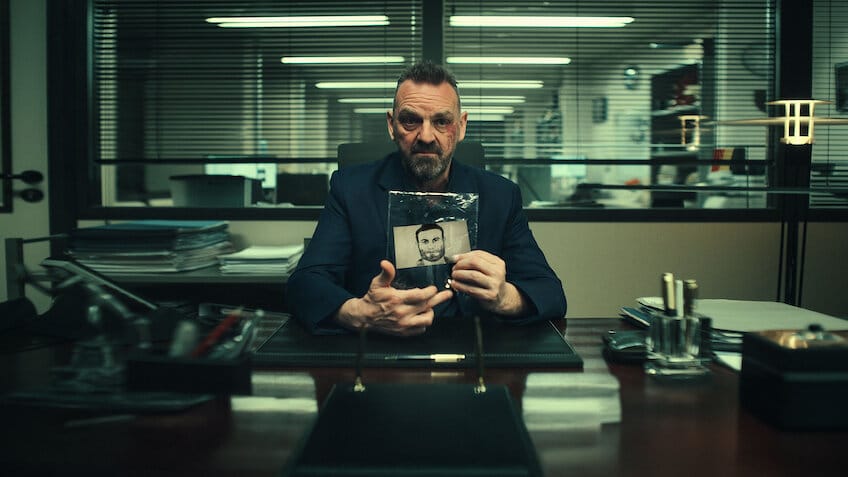

Netflix has premiered Stolen: Heist of the Century, a definitive documentary chronicle of the audacious raid on the Antwerp Diamond Center that took place over a weekend in February 2003. The 96-minute film presents a detailed examination of one of the most intricate and valuable thefts in modern history.
The production comes from a creative team with a significant track record in the true-crime genre. It is produced by RAW, the company behind American Nightmare and The Tinder Swindler, in association with Amblin Documentaries and in collaboration with Wildside. The film is written and directed by Mark Lewis, whose previous work includes the critically acclaimed documentaries Don’t F**k With Cats and Vatican Girl. The project reconstructs how a team of Italian thieves known as the “School of Turin” breached a supposedly impenetrable vault, making off with an estimated $100 million to $500 million in diamonds, gold, and other valuables, none of which have ever been recovered.
Anatomy of an Impossible Crime


The target of the heist was a subterranean vault located two floors below the main level of the Antwerp Diamond Center, an institution at the heart of a district that processes over 80% of the world’s uncut diamonds. The vault’s security was legendary, a fortress designed as a closed technological system to be impervious to any form of intrusion. Its defenses comprised ten distinct layers of security, creating a formidable challenge for any potential thief. The primary vault door was secured by a lock with 100 million possible combinations. Beyond this, the system included a series of advanced electronic sensors. A powerful magnetic field protected the door, designed to trigger an alarm if the connection between its two plates was broken. The chamber was monitored by Doppler radar and infrared heat detectors to sense motion and body heat, while a seismic sensor was calibrated to detect vibrations from any attempt at forced entry. A light sensor would be tripped by any illumination within the sealed darkness of the vault. This technological fortress was further protected by the Diamond Center’s own private security force, all within one of the most secure square miles on Earth. The complexity of this integrated system established the vault’s reputation as unbreachable, making the subsequent successful heist an intellectual feat of system-breaking rather than a crime of brute force.

The Masterminds: Inside the School of Turin
The documentary focuses on the perpetrators, a specialized crew of Italian thieves identified as the “School of Turin.” The narrative centers on Leonardo Notarbartolo, the charismatic mastermind who orchestrated the heist with meticulous, long-term planning. His methodology eschewed violence in favor of stealth and cunning, reflecting a professional ethos. For over two years prior to the robbery, Notarbartolo rented an office within the Diamond Center, posing as an Italian diamond merchant to build credibility and gain 24-hour access to the building. This infiltration allowed for extensive surveillance, reportedly involving the use of camera pens to covertly photograph the vault and its locking mechanisms. The crew was a team of specialists, each with a specific role denoted by an archetypal nickname: “The Monster,” an expert in lock-picking and mechanics; “The Genius,” a specialist in alarm systems; and the still-unidentified “King of Keys,” a master forger. Their preparation was exhaustive and mirrored the practices of legitimate engineering projects, including the construction of a full-scale replica of the vault to practice their techniques for bypassing each layer of security. This systematic approach, involving long-term research, social engineering, and prototype testing, frames the perpetrators less as common criminals and more as illicit professionals applying expert problem-solving to a high-value target.
A Cinematic Deconstruction from Acclaimed Producers
Director Mark Lewis constructs the film around a central dialectic, juxtaposing two competing perspectives for the first time. On one side are the Antwerp detectives who investigated and ultimately solved the case; on the other is Leonardo Notarbartolo, the alleged mastermind, who provides his own blow-by-blow account of the events. This structure creates a dynamic tension, inviting the viewer to weigh the procedural narrative of law enforcement against the personal, and likely self-mythologizing, testimony of the criminal. The film adopts techniques from the heist genre, utilizing reconstructions and interview framing to create suspense and manipulate audience perspective, reminiscent of the narrative misdirection seen in fictional films like Inside Man. By presenting these conflicting accounts, the documentary moves beyond a simple presentation of facts. It becomes an examination of truth, memory, and legacy, forcing the audience into an active role of assessing credibility rather than passively receiving a single, authoritative version of the story.
From Investigative Journalism to the Screen
The documentary’s narrative is anchored in extensive journalistic research, based on the 2010 non-fiction book Flawless: Inside the Largest Diamond Heist in History, written by Scott Andrew Selby and Greg Campbell. The book is the product of years of original reporting conducted across Belgium and Italy, providing a granular account of the planning, execution, and aftermath of the crime. This foundation in investigative journalism lends the film a layer of authority and detail. The connection between the book and the film is reinforced by the participation of author Scott Andrew Selby, who serves as an executive producer on the project, suggesting a commitment to the fidelity of the source material. The adaptation from a dense, text-based investigation to a 96-minute visual documentary necessitates a process of narrative compression. This translation prioritizes the cinematic elements of the story—the tension of the heist, the charisma of the key figures, and the dramatic irony of their capture—transforming detailed reporting into a visually compelling and emotionally resonant narrative for the screen.
The Flaw in the Flawless Heist
The film culminates in the central paradox of the Antwerp heist: a meticulously planned, technically brilliant crime that was ultimately unraveled by a moment of profound carelessness. Following the robbery, Notarbartolo and an accomplice discarded bags of trash along a motorway, which were discovered by a local landowner. This garbage contained crucial evidence linking the crew to the crime, including receipts from the Diamond Center and, most decisively, DNA from a half-eaten salami sandwich that was traced back to Notarbartolo. The discovery led to the arrests of Notarbartolo and three of his accomplices: Ferdinando Finotto, Elio D’Onorio, and Pietro Tavano. In 2005, a Belgian court sentenced Notarbartolo to 10 years in prison for orchestrating the heist, while the others received five-year sentences. The story, however, denies full closure. While justice was served for the perpetrators, the spoils of their crime vanished. The entire cache of diamonds, gold, and jewelry, valued at over $100 million, was never found, cementing the heist’s legendary status and leaving behind an enduring mystery.
Stolen: Heist of the Century was released on August 8, 2025.