

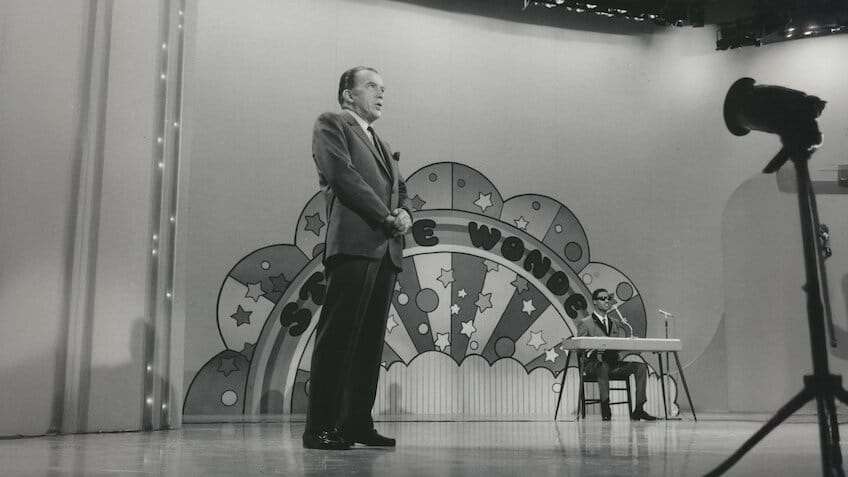

For more than two decades, he was the stoic, unsmiling monolith at the center of American television, a man whose on-camera persona was so famously wooden that comedians built entire careers imitating his stiff posture and awkward introductions. Yet, every Sunday night, from 1948 to 1971, tens of millions of Americans gathered for his “really big shew,” making The Ed Sullivan Show a national institution and its host the country’s most powerful cultural gatekeeper. A new documentary from director Sacha Jenkins, Sunday Best: The Untold Story of Ed Sullivan, revisits this towering figure of media history, proposing a radical re-reading of his legacy. The film, featuring testimonials from a diverse array of admirers like Ringo Starr, Bruce Springsteen, and Ice-T, argues that behind the “great stone face” was a quiet revolutionary, a man who deliberately and consistently used his unparalleled platform to advance the cause of racial integration, sending a subversive message of equality into the living rooms of a deeply segregated America.
The documentary sets out to tell the “untold story” promised in its title, moving beyond the well-worn tales of launching Elvis and The Beatles to uncover a more profound, politically charged narrative hidden in plain sight. It employs a unique and compelling narrative device to do so: using AI voice technology from Respeecher, the film resurrects Sullivan’s own voice to narrate his life story, drawing from the host’s extensive archive of his newspaper columns, articles, and personal letters. This technique creates an immediate and startling intimacy, giving the impression that Sullivan himself is posthumously setting the record straight. It is a strategic choice that frames the film not merely as a historical account, but as an act of reclamation, challenging viewers to reconsider a man they thought they knew and the era he helped define. The film posits that Sullivan’s most significant contribution was not just discovering new stars, but changing the sound—and the face—of America forever.

The Man Behind the Monolith


To understand the conviction behind Sullivan’s on-screen decisions, Sunday Best constructs a detailed biographical portrait that establishes a deep-rooted personal philosophy of fairness and inclusion. The film traces his origins to his birth in Harlem in 1901, a time when the neighborhood was a vibrant mix of Irish and Jewish families. It emphasizes the values instilled in him by his parents, who taught him to respect people regardless of their background, and notes the early tragedy of his twin brother’s death just months after their birth. This foundation of egalitarianism and personal loss is presented as a crucial element of his character.
The documentary follows his formative experiences, which placed him in diverse and integrated environments long before it was common. He was a talented athlete who played in an integrated baseball league in high school, an experience that exposed him to Black peers as equals on the sporting field. His professional life began as a sportswriter before a pivotal shift made him a Broadway columnist for The New York Daily News, where his column, “Little Ole New York,” immersed him in the multifaceted world of New York theater. It was here, the film argues, that his worldview was cemented. This personal history was further shaped by his marriage to Sylvia Weinstein, a Jewish woman. Their relationship faced strong opposition from both of their families, giving Sullivan a direct, personal understanding of prejudice and bigotry. The film draws a clear line from these life events to his actions as a television host. It suggests that his programming choices were not a matter of chance or even just good business sense, but the deliberate expression of a lifelong conviction. His own Irish heritage and his wife’s experience with anti-Semitism provided a powerful, empathetic lens through which he viewed the struggles of Black artists in a racist society. The documentary builds a case that his quiet on-screen activism was preceded by decades of off-screen belief, pointing to his production of an all-Black Broadway revue, Harlem Cavalcade, in the 1940s and his close friendship with performers like dancer Bill “Bojangles” Robinson, whose funeral Sullivan personally arranged and financed, ensuring the broke star received a grand send-off worthy of his talent.
The Power of the Platform
Before delving into its central thesis, the documentary meticulously establishes the immense scale and cultural gravity of The Ed Sullivan Show, which began its life as Toast of the Town. For 23 years, the program was a Sunday night ritual, a shared cultural experience that united American families in an era before cable, streaming, or social media. The film underscores the staggering size of its audience, which regularly reached between 35 and 50 million viewers each week, granting Sullivan a level of influence that is nearly unimaginable today. This enormous reach made his stage the single most important platform in American entertainment. An appearance was widely considered a guarantee of stardom, capable of transforming a relative unknown into a household name overnight. The film illustrates this “kingmaker” status with a powerful montage of the diverse talents who got their first major national exposure on his show, from comedy duos like Dean Martin and Jerry Lewis to future legends like Dick Van Dyke and Jack Benny.
The documentary breaks down Sullivan’s deceptively simple formula for success: “Open big, have a good comedy act, put in something for the children – and keep it clean.” This commitment to variety created a show with a broad, demographic-spanning appeal. On any given Sunday, viewers could see the world’s most acclaimed opera singers and ballet troupes share a stage with plate spinners, acrobats, puppeteers like Topo Gigio, ventriloquists like Señor Wences, and Borscht Belt comedians. This blend of “high brow, low brow, and everything in between” ensured there was something for every member of the family, cementing the show’s dominance for more than two decades. By quantifying this power, the film establishes the high stakes of Sullivan’s programming. When a host has the undivided attention of nearly half the country, every choice becomes significant. In this context, the decision to feature a Black artist was not merely an entertainment booking; it was a political statement with profound social implications. The stage of the Ed Sullivan Theater becomes a proxy for America itself, and Sullivan, as the ultimate gatekeeper, controlled who was welcomed into the nation’s living rooms. The film’s core argument rests on the premise that he consciously used this power not to enforce the segregated status quo, but to methodically dismantle it.
Television’s Civil Rights Battlefield
The heart of Sunday Best is its compelling and meticulously documented argument that Ed Sullivan was a civil rights trailblazer. The film juxtaposes the elegant, dignified, and powerful performances of Black artists on his stage—including legends like Ray Charles, James Brown, Nina Simone, and Diana Ross and The Supremes—with stark, unfiltered archival footage of the era’s violent racism, including images of the Ku Klux Klan and interviews with unapologetic segregationists. This contrast highlights the revolutionary nature of what Sullivan was doing. At a time when the only Black faces on television were often racist caricatures like those in Amos ‘n’ Andy, Sullivan presented Black entertainers as poised, cultured, and supremely talented artists. The documentary provides numerous examples of Sullivan standing firm against immense pressure from advertisers and southern television affiliates who objected to his booking of Black performers. When sponsors, including the powerful Ford Motor Company’s Lincoln dealers, threatened to pull their support, Sullivan refused to back down. He ignored criticism that he featured too many Black artists or that they should not be backed by white musicians on his stage.
The film focuses on small but symbolically massive gestures that were radical for their time. On national television, Sullivan publicly shook the hand of Nat King Cole and kissed singer Pearl Bailey on the cheek—acts of simple human warmth and respect that defied the racist taboos of the era and triggered outrage from bigoted viewers. These moments, the film contends, were calculated to humanize Black performers for a white audience conditioned to see them as less than equal. This consistent presentation of Black excellence had a profound impact. The documentary draws a direct line between Sullivan’s stage and the mainstream explosion of Motown. By providing a recurring national platform to acts like The Supremes, The Temptations, Stevie Wonder, and The Jackson 5, Sullivan was instrumental in making their music “the sound of young America.” The film features powerful interviews with Motown founder Berry Gordy and singer Smokey Robinson, who give firsthand testimony to Sullivan’s essential role in their success. The documentary contrasts Sullivan’s visual endorsement with Gordy’s own admission that he initially avoided putting Black faces on Motown album covers for fear of alienating white record buyers, underscoring the revolutionary power of Sullivan’s televised presentation. His stage became a performance arm of the Civil Rights Movement itself, featuring Martin Luther King Jr.’s favorite gospel singer, Mahalia Jackson, and later providing a platform for Coretta Scott King to speak to the nation after her husband’s assassination. The film’s most resonant point is that Sullivan’s activism was subversive. He did not make grand political speeches; he simply normalized Black genius, week after week. This relentless, matter-of-fact integration, beamed directly into the intimate space of the American home, was a powerful tool for changing hearts and minds.
From Elvis’s Hips to the British Invasion
To contextualize the magnitude of his civil rights advocacy, the documentary revisits the two most famous cultural earthquakes that erupted on Sullivan’s stage. The first was Elvis Presley. The film recounts Sullivan’s initial public refusal to book the controversial singer, whose swiveling hips were deemed too “vulgar” for a family audience. However, after seeing the massive ratings Elvis pulled on rival shows, Sullivan relented, signing him for an unprecedented $50,000 for three appearances. The first appearance on September 9, 1956, drew over 60 million viewers, representing a staggering 82.6 percent of the entire television audience. Performing hits like “Don’t Be Cruel,” “Love Me Tender,” and “Hound Dog,” Presley created a national sensation. The film covers the legendary third performance, where network censors famously ordered that Elvis be filmed only from the waist up. Yet, at the end of the show, Sullivan put his arm around the singer and personally vouched for him, telling America, “This is a real decent, fine boy.” This seal of approval from television’s most trusted host was instrumental in making the controversial rock and roller acceptable to mainstream America.
The second seismic event was the American debut of The Beatles. The documentary details how Sullivan’s international talent scouting network led him to the band months before they were known in the United States. Their first performance on February 9, 1964, became the single most-watched event in television history at the time, with 73 million people tuning in. The film presents this moment as more than just a musical debut; it was the official launch of the British Invasion and a defining cultural touchstone for an entire generation, providing a much-needed jolt of youthful energy to a nation still in mourning after the assassination of President Kennedy. As the band launched into “All My Loving,” “Till There Was You,” and “She Loves You,” the show helped shape their identity for their new American audience, with details like the on-screen captions that identified each member, including the playful “SORRY GIRLS, HE’S MARRIED” chyron for John Lennon. By placing these iconic, well-known stories alongside the sustained, decades-long promotion of Black artists, the film makes a powerful implicit argument. It suggests that while everyone remembers where they were when The Beatles played, the quieter, more persistent revolution Sullivan waged on behalf of racial equality was an equally, if not more, consequential part of his legacy.
A Complicated Legacy
Sunday Best avoids simple hagiography, presenting a nuanced portrait of a complex and often contradictory man. While a progressive on matters of race, Sullivan was also an authoritarian producer who ran his show with an “iron will” and was known for his legendary feuds. The documentary does not shy away from his famous clashes with artists who challenged his control or his conservative sensibilities. He famously banned rock and roll pioneer Bo Diddley after the guitarist, who was asked to perform Tennessee Ernie Ford’s “Sixteen Tons,” instead played his own hit song, “Bo Diddley.” The Doors were banished after Jim Morrison, despite agreeing beforehand to alter a lyric in “Light My Fire,” sang the original line “girl, we couldn’t get much higher” on the live broadcast. The Rolling Stones were forced to sing “let’s spend some time together” instead of “let’s spend the night together,” with Mick Jagger rolling his eyes at the camera in protest. And Bob Dylan walked off the set before his performance when a CBS executive told him he could not sing his politically charged satire, “Talkin’ John Birch Paranoid Blues.” Even Buddy Holly drew Sullivan’s ire when he insisted on playing “Oh Boy” against the host’s wishes, resulting in Sullivan mispronouncing his name on air and having his guitar amplifier turned down.
Furthermore, the film acknowledges that Sullivan’s progressivism had its limits. The same man who stood up to racist sponsors also capitulated to the anti-communist blacklist pressures of Red Channels, denouncing performers with alleged leftist sympathies. This stands in stark contrast to his steadfast loyalty to Harry Belafonte, whom he continued to support even after Belafonte was blacklisted. These contradictions reveal a man who was a progressive working within a deeply conservative framework. His fight for racial equality and his intolerance for the white rock counter-culture may have stemmed from the same place: a belief in a particular vision of an orderly, patriotic America. He saw racial integration as a moral imperative necessary to fulfill the nation’s promise, while he viewed the rebellion, drug references, and anti-authoritarianism of a later generation of artists as a threat to that same ideal. He was a man who bravely broke one of his era’s most important social rules while fiercely enforcing many others.
A Final Appraisal
In the end, Sacha Jenkins’s Sunday Best succeeds in its ambitious goal. It convincingly reframes a cultural monolith, asking a new generation of viewers to look past the awkward posture and famously stiff delivery to see the heart of a quiet revolutionary. The documentary’s greatest contribution is its powerful illustration of television’s capacity to normalize social change. It argues that Sullivan’s most enduring legacy lies not only in the countless stars he introduced to the world, but in the profound social barriers he helped to break. For 23 years, he used his “really big shew” to present an integrated, harmonious vision of America to a nation that was anything but. In doing so, he championed a simple but radical idea: that talent, dignity, and genius know no color.
The 90-minute documentary premiered on Netflix in the year 2025.